Commercial Roof Coating Restoration in San Angelo, TX
Commercial Roofing Services
Commercial Roof Coating Restoration at a Glance
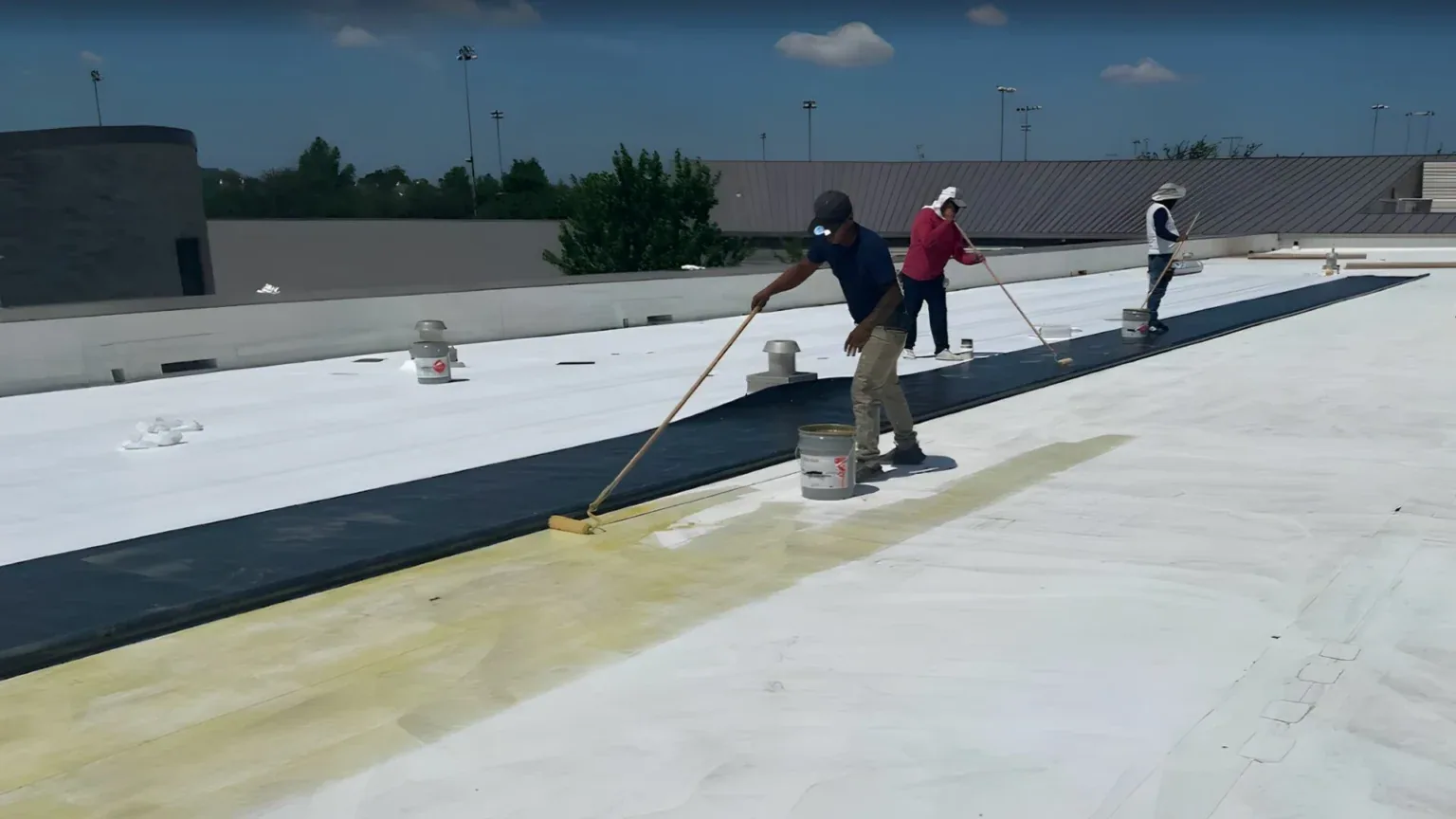
Powdery film on an aged roof weakens a coating bond. New material applied over that film can separate with it. Roof coating restoration in San Angelo, TX begins with surface condition. We establish whether preparation can expose a sound, compatible base. The coating follows repairs to the assembly that will remain. Its purpose is to protect suitable roofing material, not conceal instability underneath.
Commercial Roofers San Angelo restores serviceable commercial roofs with coating systems. We examine moisture, seams and drainage before selecting the application method. The Sherwood Way Corridor includes grocery stores and restaurants. Restoration for a building there needs attention to occupied intakes and food-service activity. Examining the retained assembly helps identify the surface preparation and operating window the project requires.
Commercial Roof Coating Restoration
Determine what the coating would retain
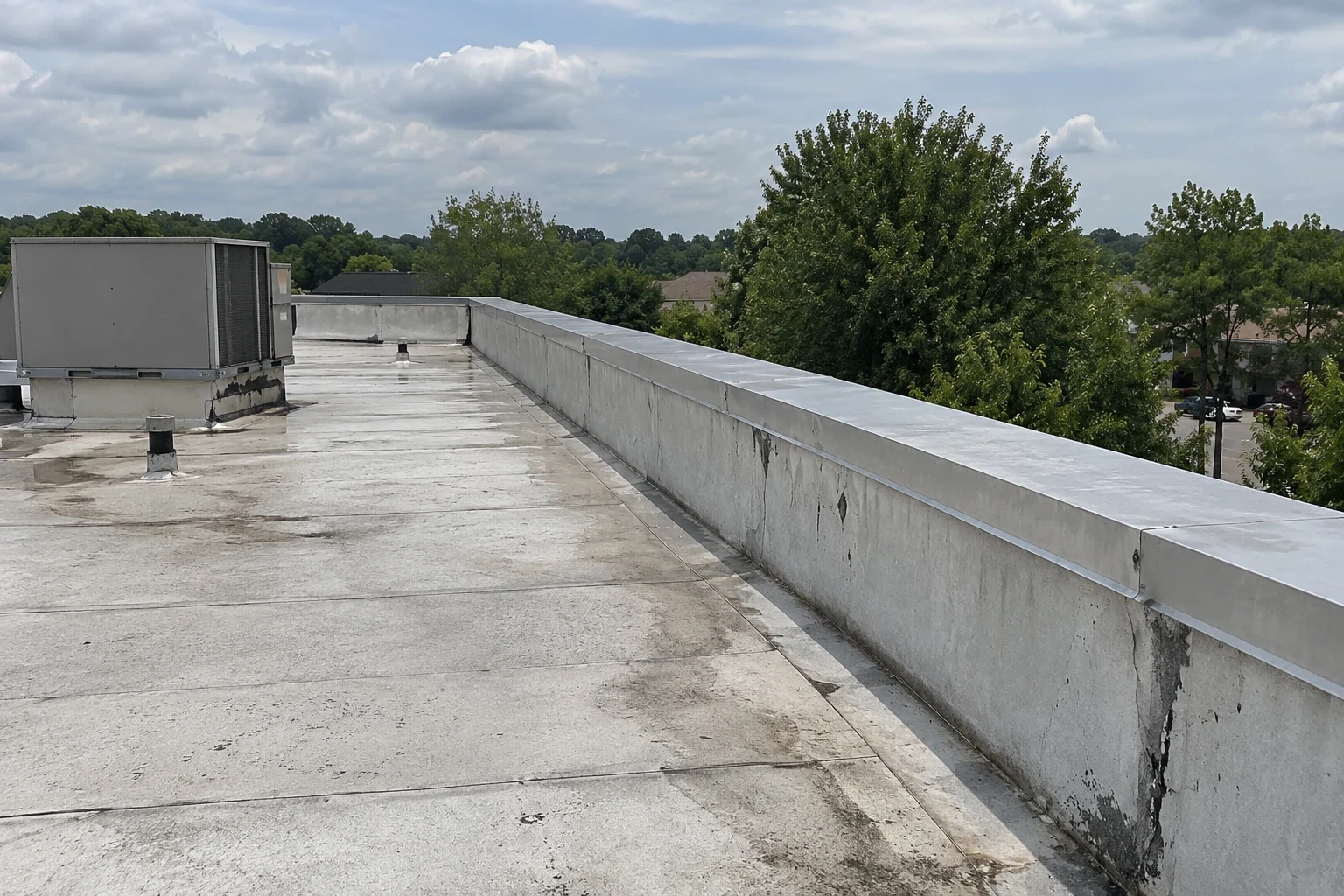
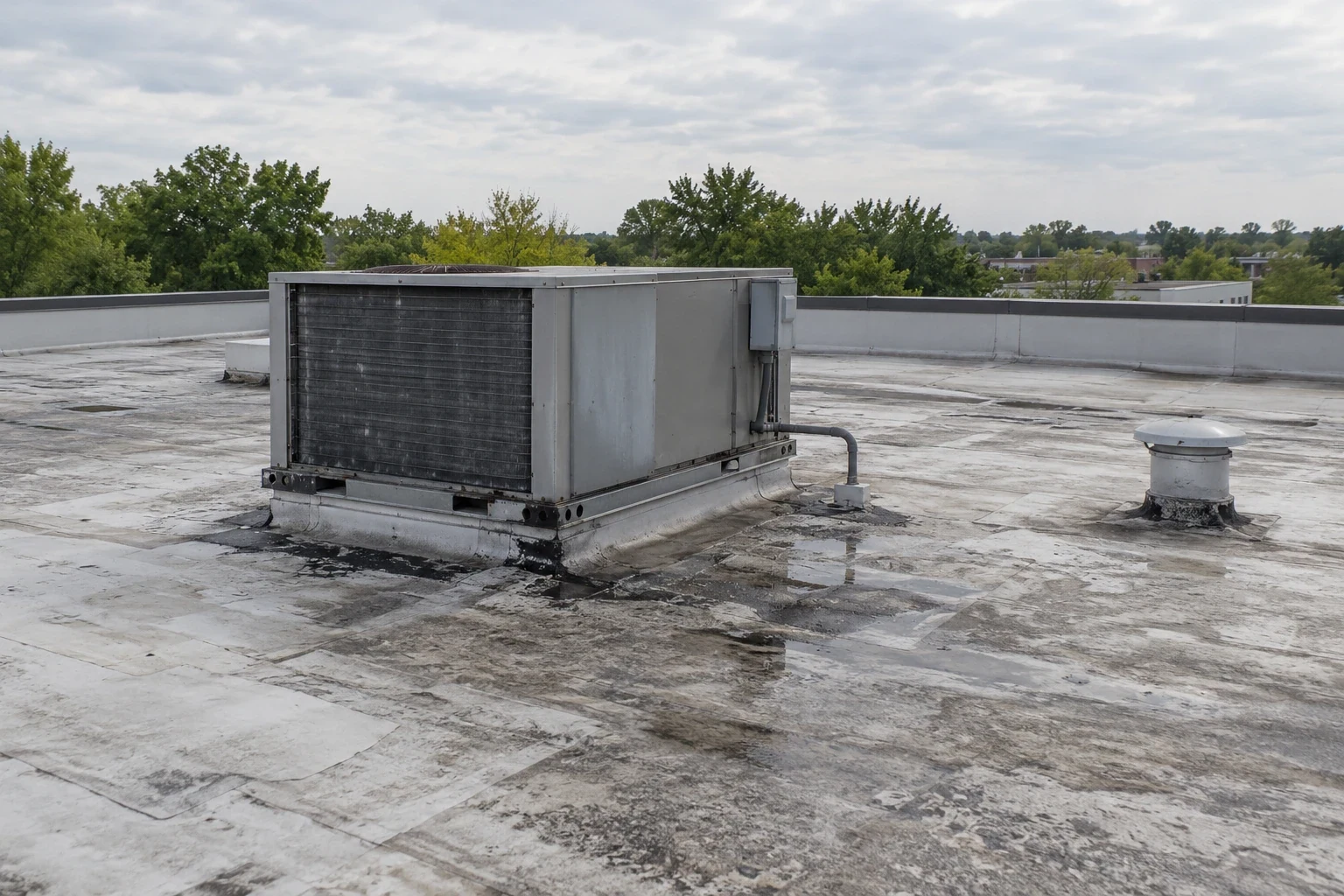
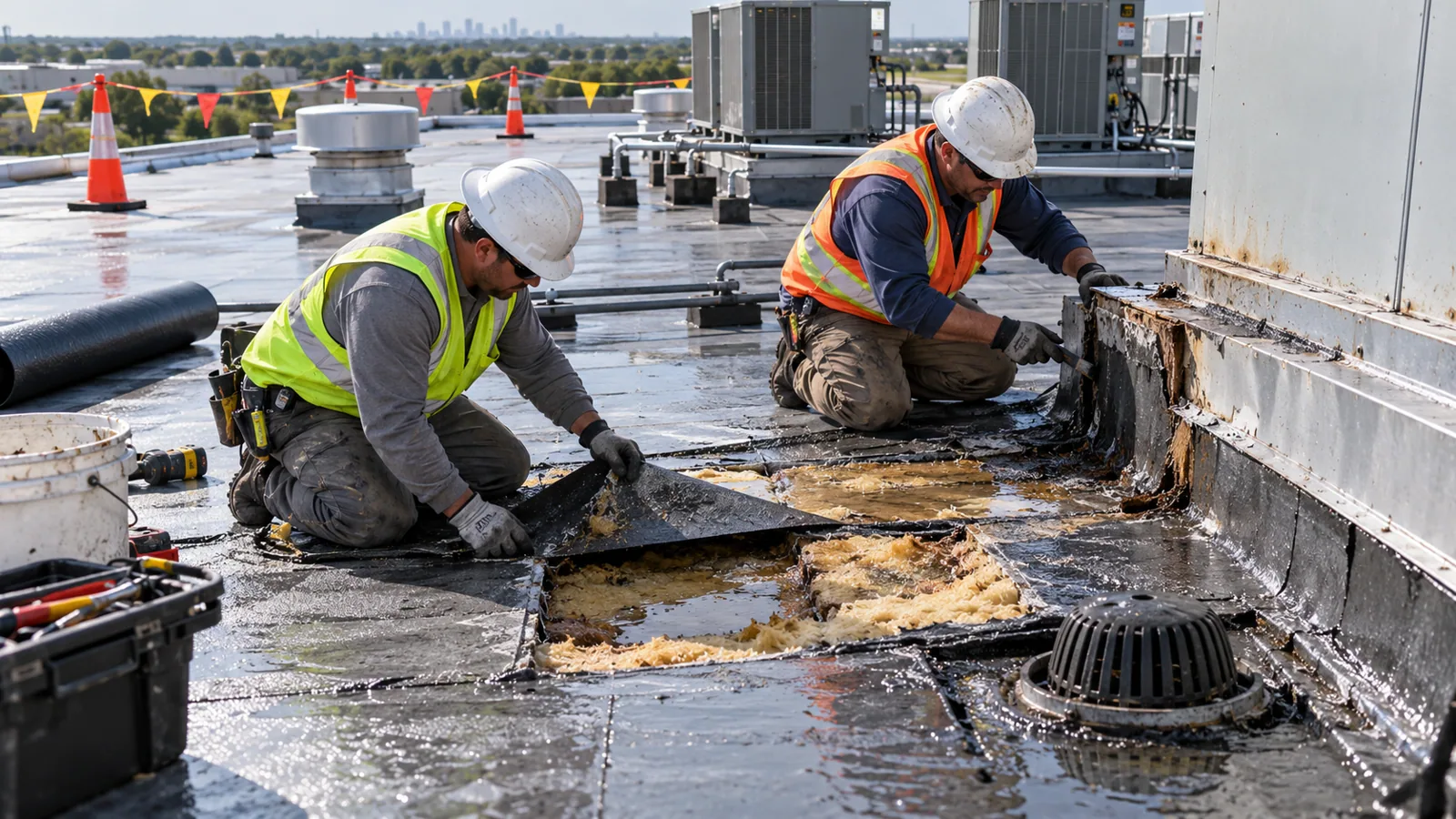
A sound membrane field can sit beside deteriorated curb flashing. Those conditions require separate decisions before coating proceeds. We assess the existing material and inspect prior repairs for compatibility. Blisters, detached layers and soft areas can require investigation beneath the surface. The findings establish whether localized correction leaves a suitable roof to restore. Widespread deterioration may require another assembly rather than liquid protection over the same material.
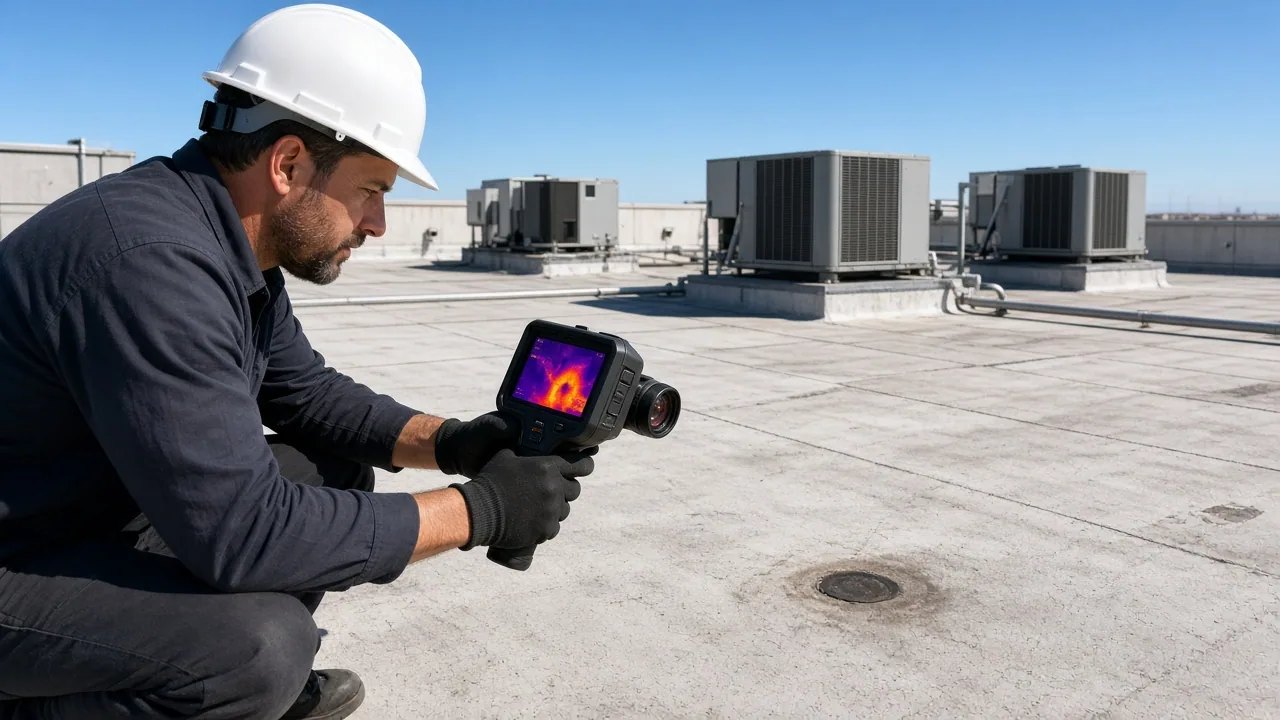
Concealed moisture needs attention where it affects the retained layers. Thermal screening and confirmation cuts can help map suspect areas. Wet material is removed to a tested boundary before surface restoration. Deck damage and attachment defects also need their own correction. A coating does not strengthen a failing deck connection. We compare the retained condition with the system requirements before ordering material. That makes the preparation scope part of the restoration decision, rather than an unpriced task discovered once the application equipment arrives.
Assess the surface before selecting a coating Book a restoration review with the existing roof material and occupied hours identified. We will test preparation needs and determine which repairs must precede application.
Commercial Roof Coating Restoration
Test the bond after the proposed preparation
Cleaning changes the surface the coating must bond to. We assess dirt, oxidation, biological growth and incompatible residues. The preparation method must suit the existing material and its condition. Aggressive washing can force water into open details or damage fragile surfaces. Those openings should be corrected before cleaning proceeds. The roof must dry sufficiently for the selected coating and primer requirements.
An adhesion test checks the prepared surface with the proposed materials. Test areas need to represent distinct surfacing or repair conditions. We allow the specified cure before examining the bond. Separation can occur within old coating, at primer or in the substrate. Its position explains which part of the preparation remains inadequate. Silicone coating applications need compatibility and adhesion established for the actual assembly. A successful test on one smooth patch does not qualify a heavily weathered section with another surface condition.
Commercial Roof Coating Restoration
Repair discontinuities before applying the field coat
A split seam needs repair material matched to its movement and construction. Field coating alone may not bridge an active opening reliably. We assess joints, penetrations and flashing terminations as separate details. Reinforcement is installed where the specified system requires it. The preparation must preserve the opening clearance at drains and equipment. Excess material in those positions can interfere with their intended function.
Metal movement can load liquid-applied material across a rigid transition. We check joint geometry and attachment before selecting the detail treatment. A distorted closure or loose support requires correction ahead of coating. The revised connection should control the cause of recurring separation. Metal perimeter repair may therefore be part of the restoration scope. We identify the components requiring that work rather than assuming every visible line receives the same reinforcement. Once detailed repairs are suitable, the field application can form a continuous protective surface around them.
Commercial Roof Coating Restoration
Measure the installed film against the system requirements
A thin spot can remain difficult to see in a uniform-colored coating. We check application thickness using the methods required for the selected system. Wet-film measurements guide application while material is being placed. Finished checks follow the specified cure and inspection procedure. Roof texture and profile affect how material covers the surface. The application plan accounts for those differences at valleys and raised details.
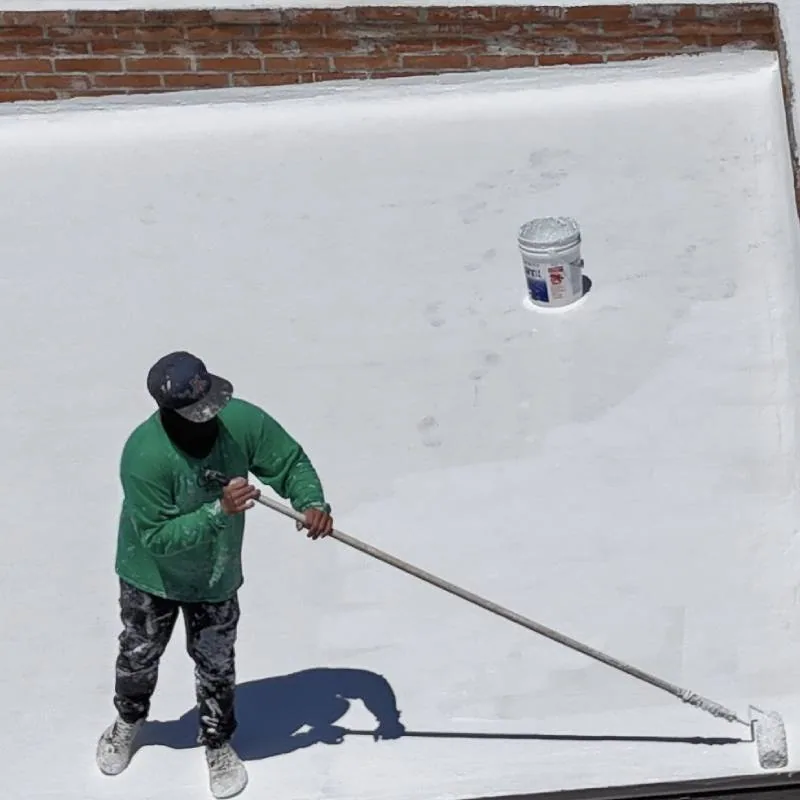
Acrylic coating work has drying and weather requirements different from other materials. We review temperature, surface dryness and the forecast before application. San Angelo summer heat makes actual substrate temperature relevant to that schedule. Rapid drying at one position does not establish cure across the roof. We maintain the required interval between preparation, detailed treatment and field coats. Coverage is controlled by the system specification and the inspected surface, rather than by appearance alone or an assumed quantity spread over an uncertain roof area.
Commercial Roof Coating Restoration
Correct retained water before it limits restoration
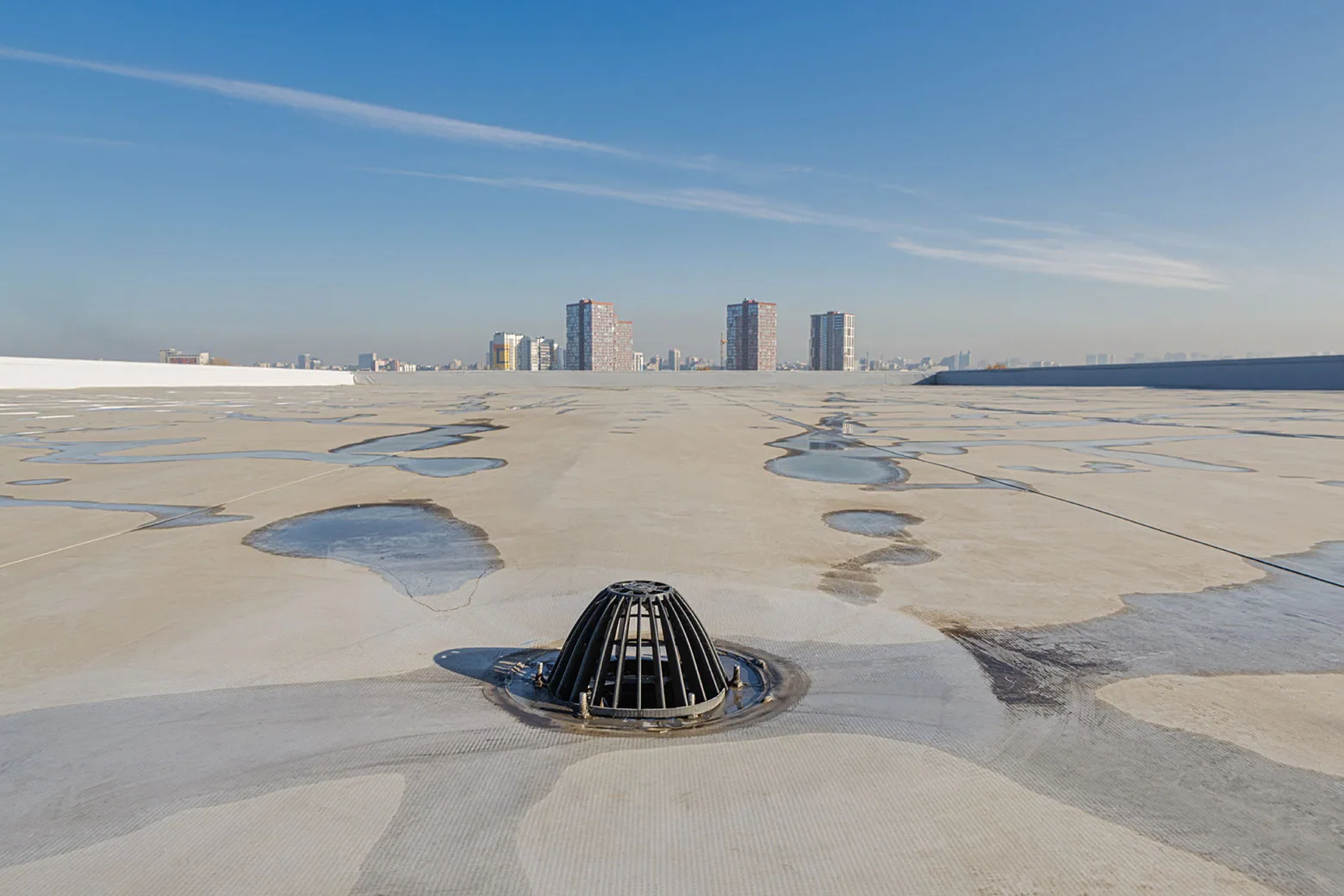
A low area can concentrate dirt and remain wet after the surrounding roof dries. Its condition affects both preparation and coating suitability. We examine the gradient into the outlet and the supporting layers beneath the depression. Cleaning an open drain may leave the low spot unchanged. The correction can require insulation work or outlet adjustment. Those construction tasks should be settled before liquid materials cover the field.
Coating tolerance for standing water varies by material and specified assembly. We use the selected system requirements to assess the exposure. A generic material label is insufficient to approve persistent ponding. Repairing drainage-related depressions can establish a better base for restoration. We also keep strainers and overflow approaches free of application debris. The finished coating must meet its detail requirements at the outlet flange. Water should leave through a maintained drainage route, instead of testing an uncorrected low point immediately after restoration is complete.
Commercial Roof Coating Restoration
Protect intakes and access during application
The Arden Road Corridor contains food-market and bar operations. Work for an occupied business there needs coordination around customers and ventilation. We review the proposed materials with the responsible building staff. Application method affects overspray control and the working area required. Equipment and adjacent property need protection appropriate to that method. Wind conditions can change whether spraying is suitable during the planned shift.
For commercial buildings along Arden Road, access arrangements should accompany the surface-restoration scope. We identify which roof areas need restricted traffic during cure. An occupied business may need a separate interval for intake protection or equipment work. Maintenance routes are restored after the material reaches the required condition. The manager receives the locations needing continued attention, including outlets and frequently serviced equipment. Continued maintenance of the restored surface helps preserve those details. Later cuts and patches must remain compatible with the coating already installed.
Questions and answers
Questions About Commercial Roof Coating Restoration
Can chalking be cleaned sufficiently for a new coating?
Preparation may expose a suitable bond surface, but the proposed method needs assessment and testing. We check whether separation occurs in remaining weathered material. Loose film must be removed or treated as the specified system requires. The decision follows the prepared surface and adhesion result rather than the original appearance.
Would a coating close an actively moving seam?
Repair the moving connection before applying the field material. We examine the seam, attachment and stress causing the opening. A specified reinforced detail may be appropriate after that correction. Simply covering an active gap can transfer the same movement into the new coating and leave its bond vulnerable.
How do you check for uneven application thickness?
We use the selected system measurement and inspection requirements. Wet-film checks help control placement, while finished examination follows cure. Textured areas and raised details need particular attention. A consistent color does not establish adequate thickness. The application sequence should make those measurements part of the work rather than a later assumption.
Can a restaurant operate during roof restoration?
Continued operation follows ventilation, protection and access requirements for the proposed materials. We coordinate intake arrangements with building staff and the mechanical trade where necessary. Weather can change the suitable application window. The plan should identify any restriction affecting food preparation before cleaning or coating begins above that operation.
What changes after a roof has been coated?
Later repair materials need compatibility with the installed coating. Equipment service should avoid damage while maintaining drainage and designated access paths. We explain which details merit observation during maintenance. The restored surface still requires inspection after new penetrations or mechanical changes, because those activities can alter the connections completed during restoration.