Commercial Roof Leak Repair in San Angelo, TX
Commercial Roofing Services
Commercial Roof Leak Repair at a Glance
Water backed up behind a drain strainer loads nearby seams. A blocked outlet can expose defects that stayed dry during lighter rain. Active leak repair in San Angelo, TX starts by checking that relationship. We examine the entry conditions as well as the roof opening. The correction must address the water path and its driving cause. A dry visit still needs the history of the wet event.
Commercial Roofers San Angelo traces and repairs commercial roof leaks. We assess drainage, membrane details and rooftop equipment connections. Rio Concho Drive contains dining and catering operations. For a business in that corridor, containment needs to protect occupied rooms. The manager can help by identifying the affected activity and timing. An urgent leak may require temporary roof protection before the complete investigation can proceed safely.
Commercial Roof Leak Repair
Record the conditions that started the flow
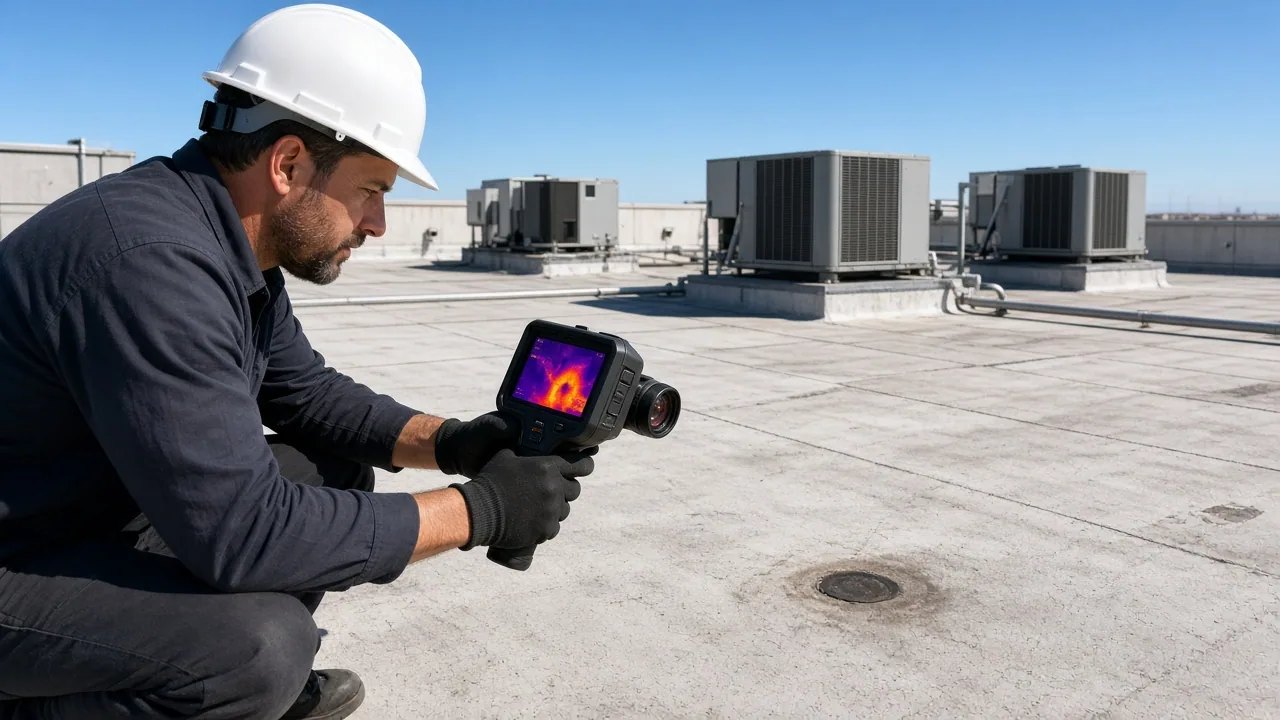
Water during rain differs from dripping while cooling equipment runs. We ask about the time, duration and conditions of the event. Wind direction, equipment operation and recent service can guide the first checks. Interior photographs are useful while the leak remains active. Marking the affected position helps align it with roof features above. Avoid disturbing wet electrical equipment or unsupported ceiling material.
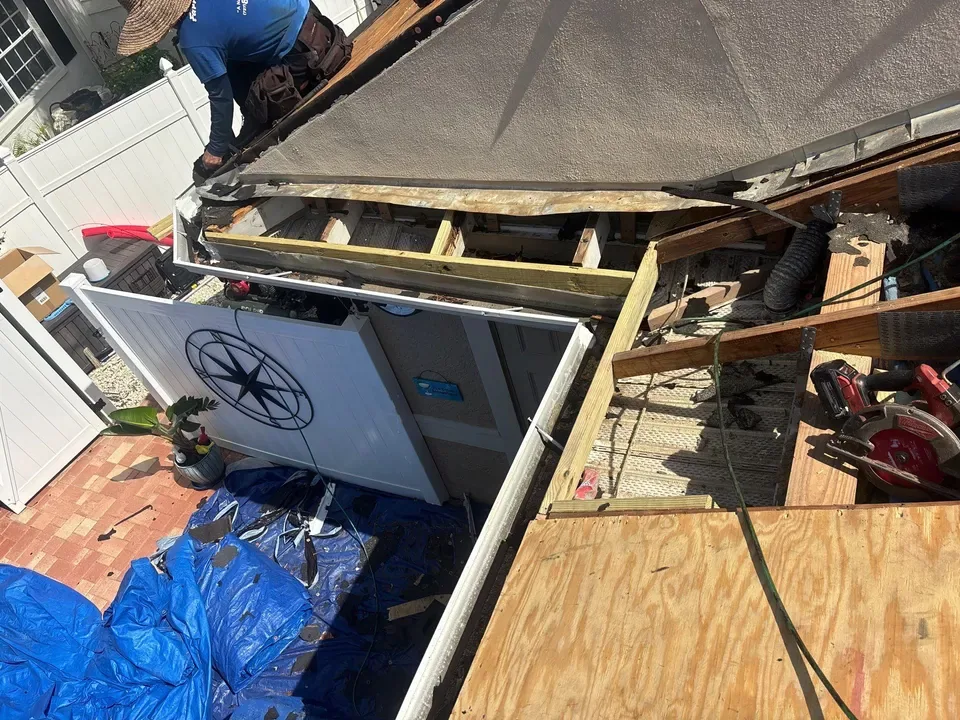
We compare the interior observation with seams, drains and penetrations. Water can move along concealed layers before reaching the occupied space. The suspected route needs examination rather than a patch directly above the drip. Equipment condensate and plumbing can also produce water near roof openings. We coordinate those checks with the responsible building trade. Examining the adjoining roof construction helps distinguish a roofing defect from another source. The repair scope should follow that distinction before roof material is removed.
Bring the leak conditions to the roof visit Call with the affected room, event timing and equipment activity. We will trace the entry conditions and identify the containment and permanent repair needed.
Commercial Roof Leak Repair
Check the level that reached the opening
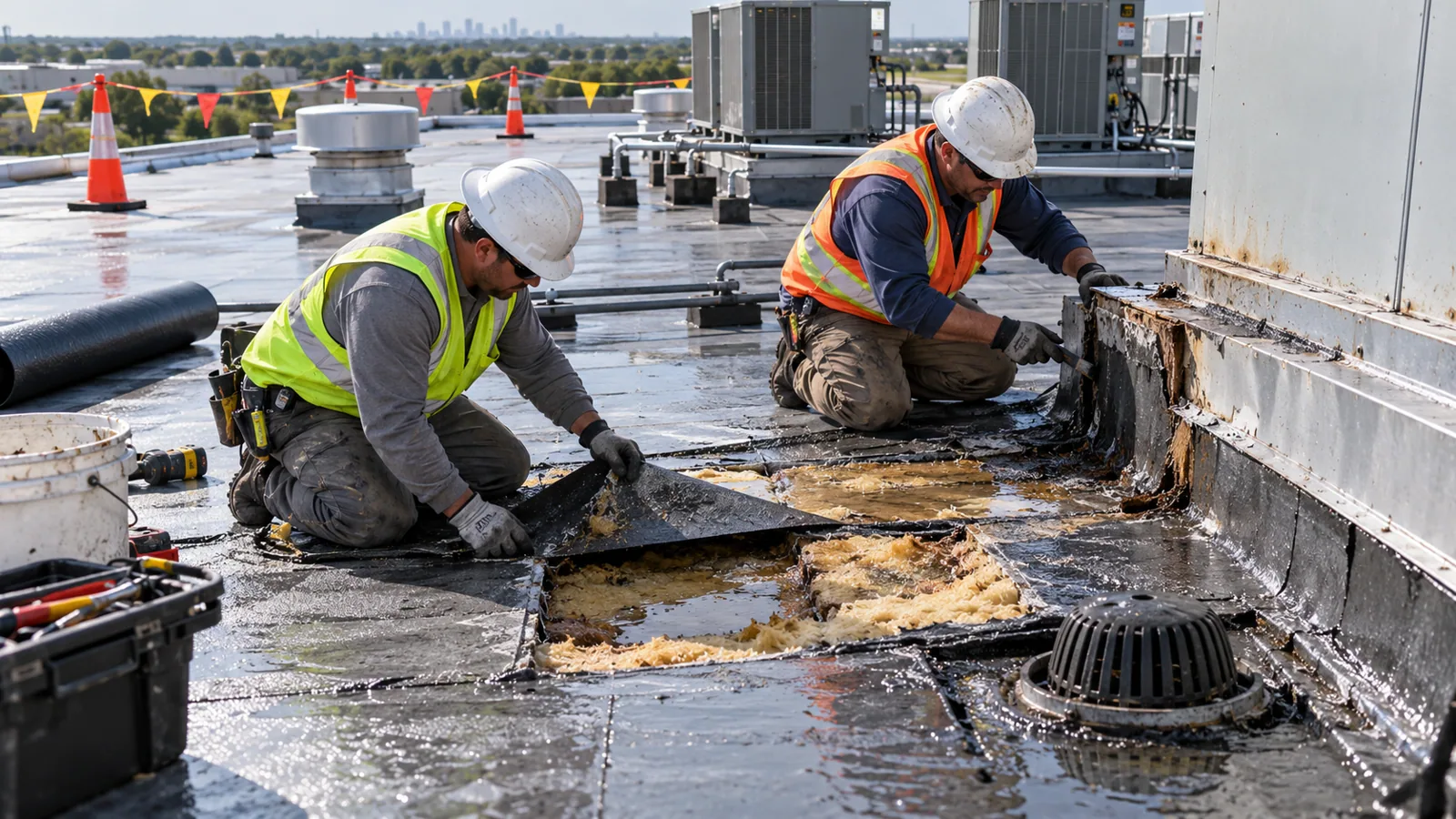
Debris at an outlet can change the water level during rainfall. We inspect drain bowls, strainers and the approach to the outlet. A compressed insulation area can create a separate low spot. Water held there may reach an otherwise sheltered termination. Clearing debris removes an obstruction but does not correct that elevation. We inspect the exposed detail after the water has drained.
Drain and overflow repairs must account for both collection and discharge. A roof outlet can remain open while its connected drainage pipe is blocked. That condition requires the appropriate plumbing evaluation. We check accessible roof connections and identify the trade needed for concealed piping. Overflow discharge should remain clear and recognizable to building staff. Repeated water backup deserves investigation before a new surface patch hides the seam that has been carrying the added exposure.
Commercial Roof Leak Repair
Test the suspected detail without flooding the building
A controlled water test needs a defined purpose and a safe limit. We assess whether the roof and interior can tolerate testing. The sequence isolates selected details rather than wetting everything at once. Building staff monitors the affected space during the test. Any sign of renewed entry changes or stops the procedure. Electrical and ceiling hazards must be addressed before testing can begin.
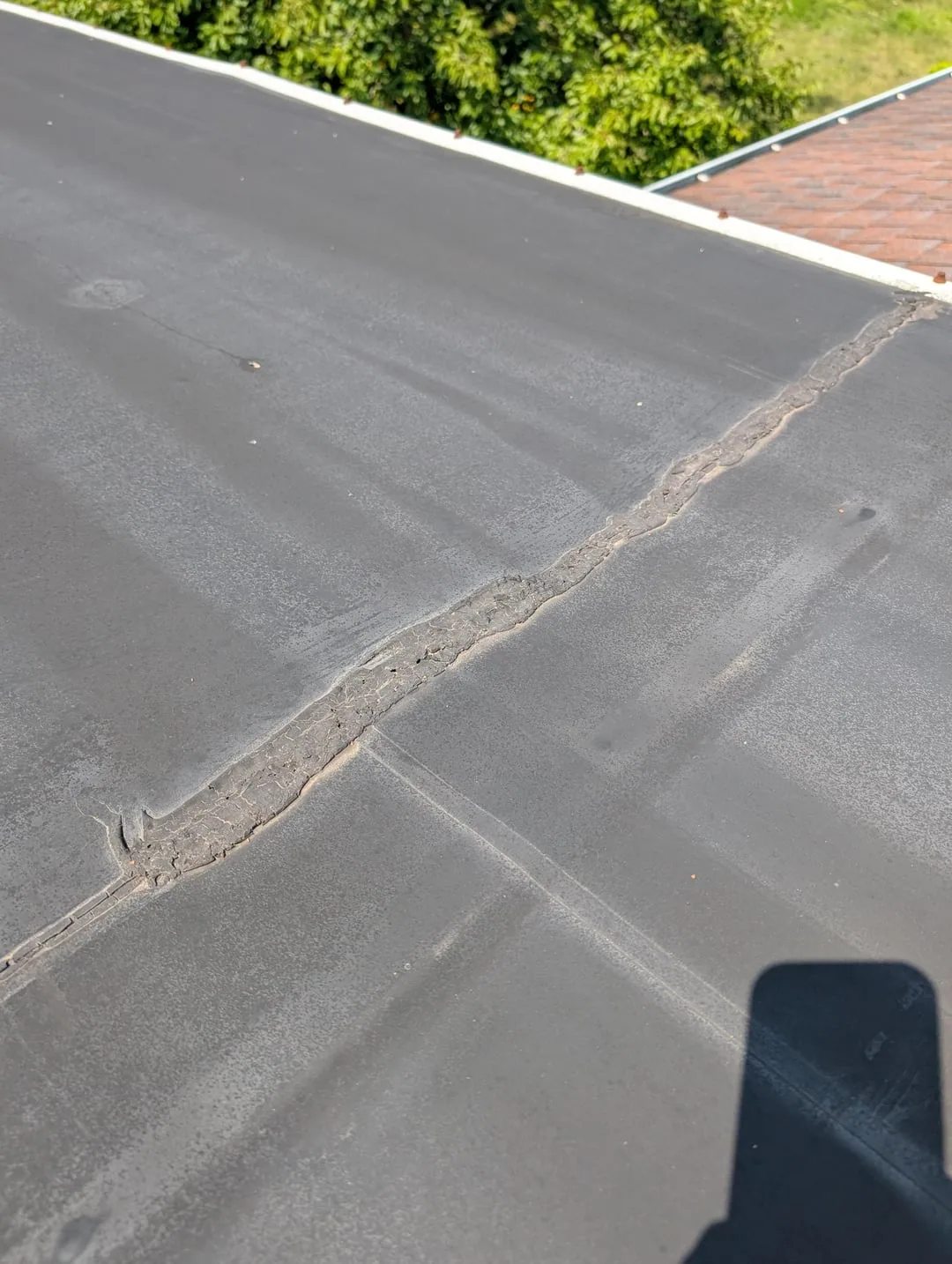
Seam probing can identify a loose overlap without introducing water. We inspect punctures, curb corners and the underside of accessible metal closures. Repairing an open membrane seam requires a sound joining surface beyond the defect. Surface sealant can conceal a wider separation underneath. We may remove that material to examine the original connection. Test results are considered alongside the leak history and visible findings. A single dry test should not outweigh a clear pattern of water entry under different operating conditions.
Commercial Roof Leak Repair
Remove moisture-damaged support where needed
A closed membrane opening can leave wet insulation in service. We assess concealed condition where it affects the planned correction. Test cuts reveal the supporting layers and their current integrity. Moisture indicators help select additional locations rather than assigning an arbitrary removal area. Moisture mapping with physical confirmation can be useful when the affected extent is unclear. The findings guide removal back to sound material.
Wet cover board may lose strength under a replacement patch. Insulation can also compress and change the local drain gradient. Replacing those layers gives the membrane a suitable supporting surface. We match the repaired area to the adjoining height and attachment. The replacement detail must not create a new pocket for water. Widespread moisture requires a broader discussion of correction options. The immediate leak repair and the longer repair extent should remain separate decisions, so temporary containment is not mistaken for completed assembly restoration.
Commercial Roof Leak Repair
Protect the occupied space during the correction
Hotels and restaurants operate along the North Bryant Boulevard Corridor. A roof opening over a guest room affects a different activity from one over storage. We establish the affected rooms before selecting the repair sequence. Localized interior protection must suit the materials and hazards present. Building staff manages room access and relocation where needed. Roofing work then proceeds with the agreed exposure limits in place.
The hotel roof assembly also meets equipment serving occupied rooms. A leak near that equipment needs attention to vibration and condensate. We check the curb flashing and ask the mechanical trade to evaluate connected equipment. Work that changes intake or exhaust arrangements requires coordination before removal. Along the Rio Concho Drive Corridor, food preparation can impose separate protection requirements. We plan debris handling and material preparation outside those occupied activities. The correction should restore weather protection without leaving an unresolved equipment or interior safety condition.
Commercial Roof Leak Repair
Observe the repaired water path
The completed repair must connect continuously to the surrounding roof. We examine joining edges and termination points after installation. Where testing is suitable, the method targets the corrected detail. We also check that debris has not reached the nearby drain. Temporary coverings are removed or replaced as the permanent scope requires. The property manager should know which work has reached completion.
Interior drying and material restoration may continue after entry is stopped. The roof correction does not establish that concealed building finishes are dry. Appropriate restoration trades assess those materials and any remaining hazards. We provide the roof repair location and the condition addressed. That information helps separate later residual dripping from renewed roof entry. A follow-up observation during suitable weather can test the repair against its original exposure. Report new water promptly with its timing and location so the next examination begins with a defined change in conditions.
Questions and answers
Questions About Commercial Roof Leak Repair
Can a leak be traced on a dry afternoon?
Dry conditions allow seam checks and close examination of suspected details. The event history becomes especially useful then. We ask for photographs and timing relative to rain or equipment operation. Controlled testing may be appropriate after assessing interior risks. We select the method needed to resolve the particular water path.
Will clearing the drain be enough to stop the leak?
Removing an obstruction can reduce water backup, but the exposed roof detail still needs checking. A seam or drain connection may already have opened. We assess both the outlet and the affected assembly. Piping restrictions belong with the plumbing trade. The completed scope follows the cause of the backup and the damage found.
Should staff take down a wet ceiling tile?
Keep people clear of sagging material and wet electrical components. Building staff should arrange safe assessment of the interior hazard. We need the location and photographs if they can be obtained safely. Removing interior material without checking its support and nearby systems can create another risk while the roof investigation is pending.
Could cooling equipment be producing the water?
Condensate and equipment connections can imitate a rain-related roof leak. We compare the dripping with equipment operation and weather timing. The mechanical trade checks its drainage and connections. We inspect the curb and membrane around the unit. That separation prevents roofing material from being replaced while the equipment problem remains active.
Why can dripping continue after the entry is repaired?
Water retained inside the assembly or finishes can drain after the opening is closed. We assess roof moisture where the repair requires it. Interior restoration staff evaluates affected finishes. Record whether the dripping changes during new rain. That observation helps distinguish retained water from an entry path requiring further roof work.