Commercial Roofing for San Angelo Business & Industrial Park
Service Areas
San Angelo Business & Industrial Park at a Glance
The San Angelo Business & Industrial Park is a multi-occupant area with manufacturing, construction equipment, transportation, energy and document-storage operations. Its connections include U.S. Highway 67, Loop 306 and the Ports-to-Plains corridor. Those uses can mean active loading, equipment access and shift schedules, but they do not establish any building's roof type. We inspect each assembly before selecting repair, recover, coating or replacement. For nearby commercial comparisons, managers can review the West Loop 306 corridor while keeping each building’s findings separate. San Angelo's July normal daily high is 96 to 99°F; summer heat makes movement and surface bond worth testing directly.
On a multi-building property, the inspection can be sequenced by roof area and operating priority. We begin with active water, exposed insulation or a condition that threatens equipment. The remaining roofs can be checked in order of access and maintenance records. This gives the property manager a clear list of immediate work and deferred items without merging every building into one project.
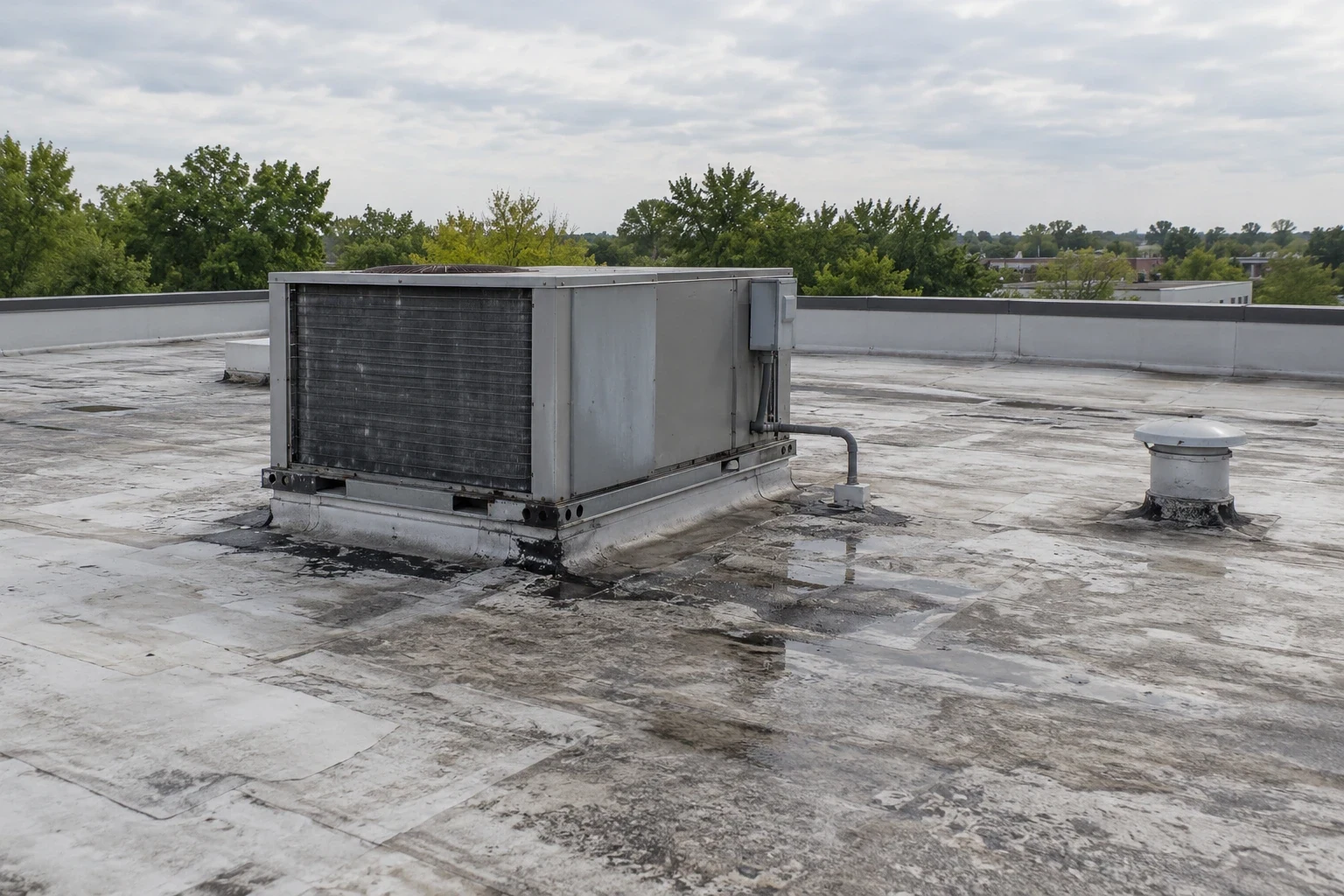
San Angelo Business & Industrial Park
Start with assembly records and field observation
A business park contains multiple building functions. One roof may serve offices, another storage or production; no system is assumed from the property's address or occupant. We ask for roof plans, warranty records and past repair notes, then verify what is present. The inspection records deck type when visible, membrane or metal, insulation layers, drains and penetrations. Those details determine which repair materials can tie into the existing roof.
If records are incomplete, we can open a small test area when moisture or layer depth remains uncertain. We document what was removed, moisture conditions and any deck issue. The opening is closed with compatible materials. A written roof inspection report marks the inspected areas and separates observed defects from items that could not be confirmed. That baseline is useful when several managers share maintenance responsibility across the park.
Map roof scope to each operating building Arrange an inspection for your San Angelo industrial property. Share assembly records, equipment access and shift requirements; we will document findings and a building-specific repair boundary.
San Angelo Business & Industrial Park
Account for freight and operating routes
Manufacturing, distribution and transportation operations can depend on loading docks, trailer turns and equipment movement. We identify active routes before placing a lift, pallet or debris container. The property contact can confirm shift changes and delivery windows. A staging plan should leave the required route open or identify the period when it changes. The park's highway connections help explain why road access is relevant, but we verify the actual route at each property.
Work can be divided by roof section when that protects operations. Each phase lists its open area, material delivery, daily close point and access restriction. For a leak repair, we isolate the affected detail. For broader tear-off, the project manager coordinates staging and disposal with the facility. We identify any contractor or equipment vendor needing roof access during the project. That prevents new penetrations or service visits from interfering with fresh flashing. Our commercial repair work can be planned without treating a multi-tenant site as a single undifferentiated building.
San Angelo Business & Industrial Park
Find the failure without expanding the scope
Leaks near production or storage spaces can put equipment, inventory or operations at risk. We begin with the reported interior location and trace likely paths to the roof. Water can travel along a deck or beneath insulation. We inspect seams, wall transitions, penetrations and low areas before defining a repair. A test cut can show whether insulation is wet and how far it extends.
Equipment curbs and service paths need careful review. We check flashing at each curb, fasteners around metal edges and membrane bond near repeated foot traffic. A detail that appears sealed from above can still have a loose corner underneath. If moisture has reached the deck, we photograph the condition and notify the manager before closing it. We identify the removal boundary and replacement layers in writing. The emergency response can contain active water while a full repair scope is set. Temporary coverage is not presented as completed replacement.
Manufacturing and energy-related operations may have rooftop services or cable routes that are not visible from the ground. We coordinate with the site contact before moving or covering anything. If another trade must return, we mark its access path and protect the finished membrane. Shared roof access rules should be included in the closeout, especially where several occupants rely on one roof hatch or service ladder.
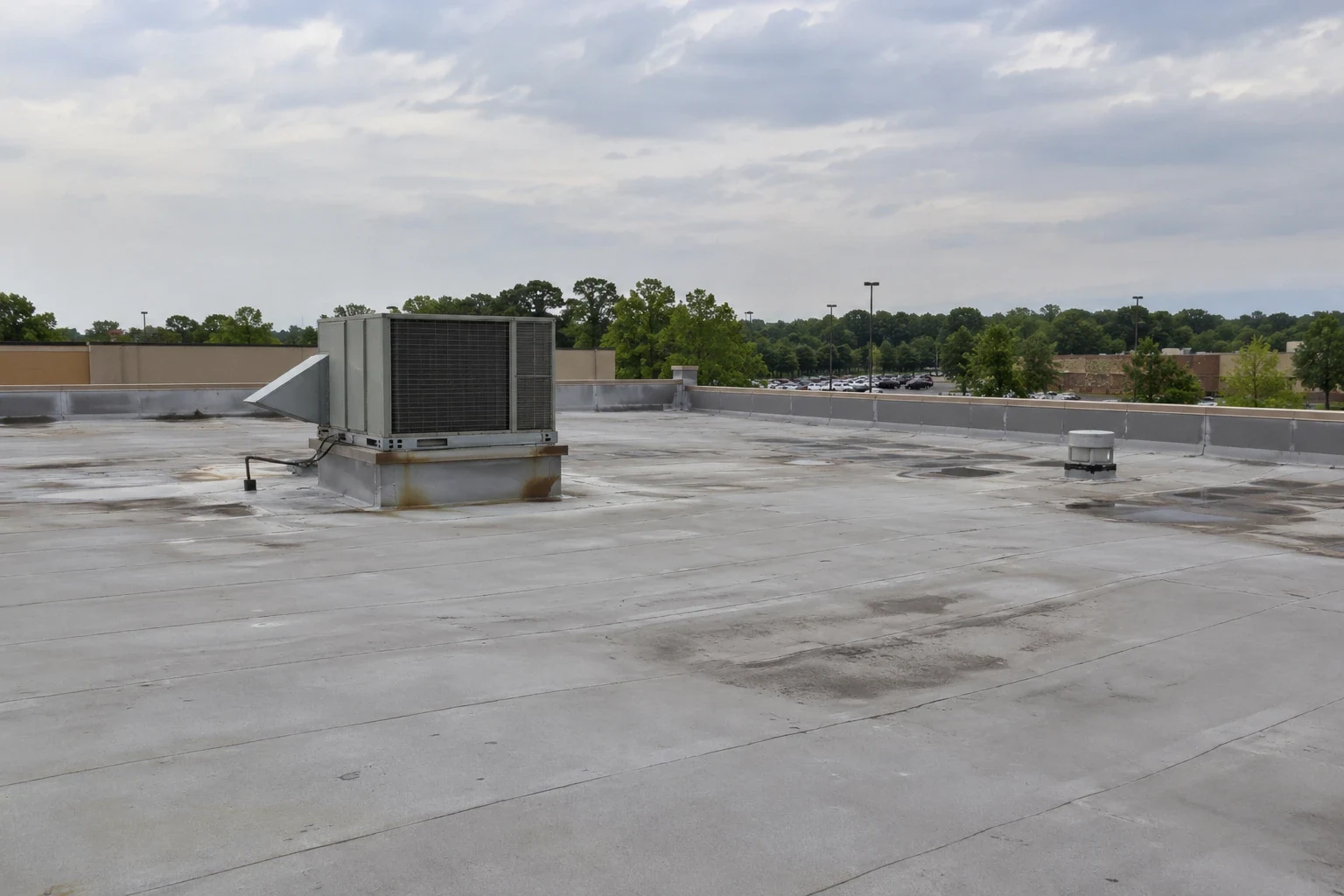
San Angelo Business & Industrial Park
Use roof condition to select the next step
Repair is appropriate when the defect is localized and neighboring materials remain sound. A recover may fit a dry, attached assembly that meets code and project requirements. Coating depends on surface compatibility, preparation and bond. Replacement is reviewed when wet insulation, failed attachment or repeated leaks extend across broader areas. Testing helps compare options across buildings without assuming the same solution works for every tenant.
San Angelo's normal July precipitation is 1.10 inches. It provides climate context, not a performance record for a particular roof. We inspect drains and low points at each building. Summer temperature also affects coatings, adhesives and membrane welding. The schedule should allow preparation, application and close-in conditions to meet the selected system requirements. Cost drivers include access, tear-off, insulation, edge metal, equipment coordination and operation phasing. A restoration assessment can compare coating with repair or replacement only where the assembly is dry and compatible.
Where the park's planned Gateway Section 2 expansion enters a future schedule, we keep present roof scopes tied to existing occupied buildings. A planned commercial area is not described as an operating property. Managers can request a separate roof review when a future building design is available.
San Angelo Business & Industrial Park
Make handoffs clear across occupants
A multi-occupant park benefits from repair records tied to the specific roof area. We label photographs, note the tenant or building only when provided by the property manager, and record the conditions found. We do not infer an occupant's roof history from another building in the park. If a concealed condition changes the estimate, the manager receives documentation and a price before the scope expands.
Closeout confirms that the roof is watertight, drains are clear and staging materials are removed. The manager receives completed photos and open items. An unoccupied or future development area is not described as an operating building. The plan notes any known upcoming access change without treating it as completed construction. A maintenance program can track repairs by building and help coordinate future inspections. Managers comparing other San Angelo commercial areas can review Pulliam Street and West Loop 306; separate roof assessments remain necessary.
Each building gets its own repair photographs, warranty documents and open-item list. That makes budget comparison possible without implying that one occupant's roof condition applies to another.
Responsibility for roof access and post-repair monitoring stays clearly assigned.
Each closeout can support the next inspection cycle.
Questions and answers
Questions About San Angelo Business & Industrial Park
Do you work on every building in the park with the same roof system?
No. We inspect each building and verify its assembly. Manufacturing, storage and office uses can have different roof construction, equipment, drainage and access.
Can repairs happen while operations continue?
Often, with a sequence that keeps required loading and equipment routes open. We coordinate staging, lift placement, shift timing and daily close-in with the property manager.
How do you decide whether insulation must be removed?
We inspect visible conditions and use a test cut or other focused testing when the moisture edge is unclear. The documented boundary sets the removal quantity.
Does a highway connection establish a delivery route for roof materials?
No. The area connects to regional routes, but the property entrance, turning space and current restrictions must be confirmed before delivery.