Commercial Roofing on West Loop 306 in San Angelo, TX
Service Areas
West Loop 306 in San Angelo at a Glance
Loop 306 is a major TxDOT-maintained San Angelo thoroughfare. Hotels and restaurants operate along the west corridor. Roof planning should account for property access and occupancy, while condition decisions come from inspection. A hotel may have guest rooms below its roof; restaurant systems may include exhaust or service access. We verify what is on the building. San Angelo's July normal daily high ranges from 96 to 99°F, so seam bond, flashing movement and surface preparation can affect repair timing. Managers can compare access questions with the Southwest Boulevard corridor, but a nearby roof never establishes this building’s condition.
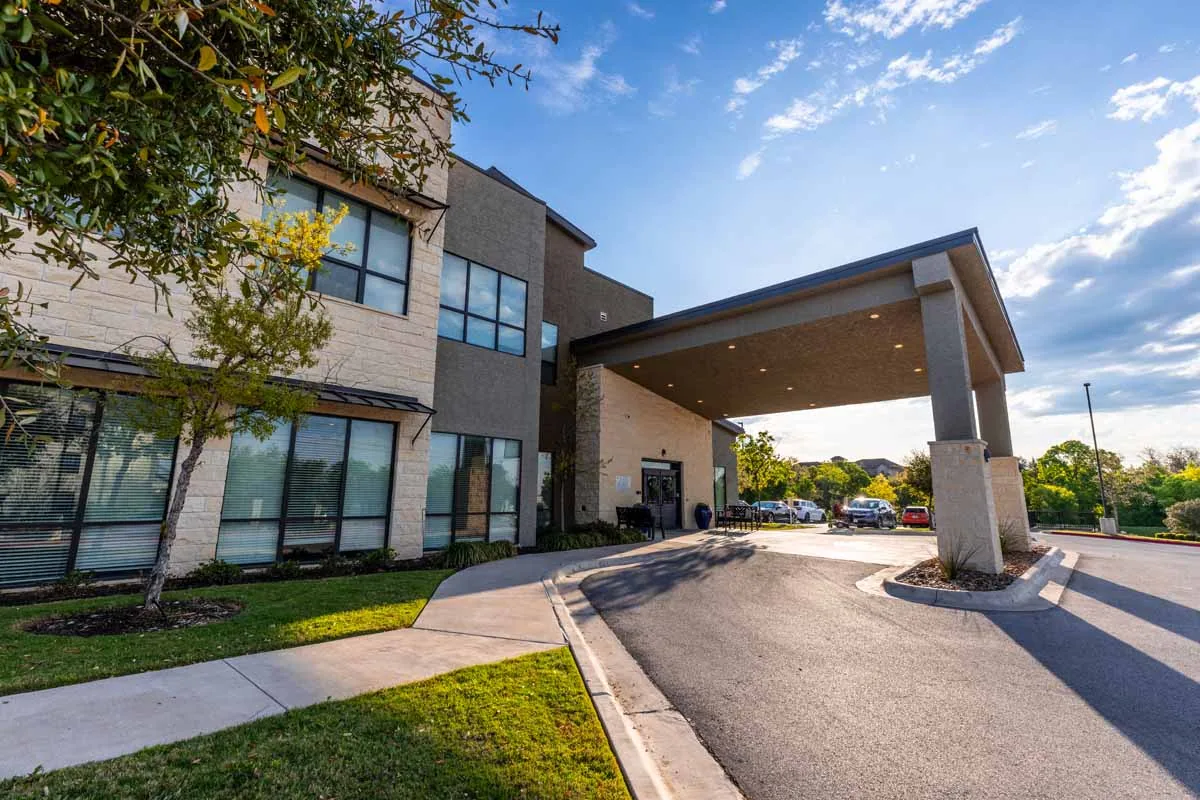
West Loop 306 in San Angelo
Trace the opening rather than patching a ceiling mark
Water can move sideways beneath a membrane before entering an occupied room. We follow likely paths across insulation, deck flutes and framing. The room with a stain is a starting point, not an exact roof location. We inspect seams, penetrations, parapets and drains around the area. Interior records can help narrow the search if they include date and weather conditions.
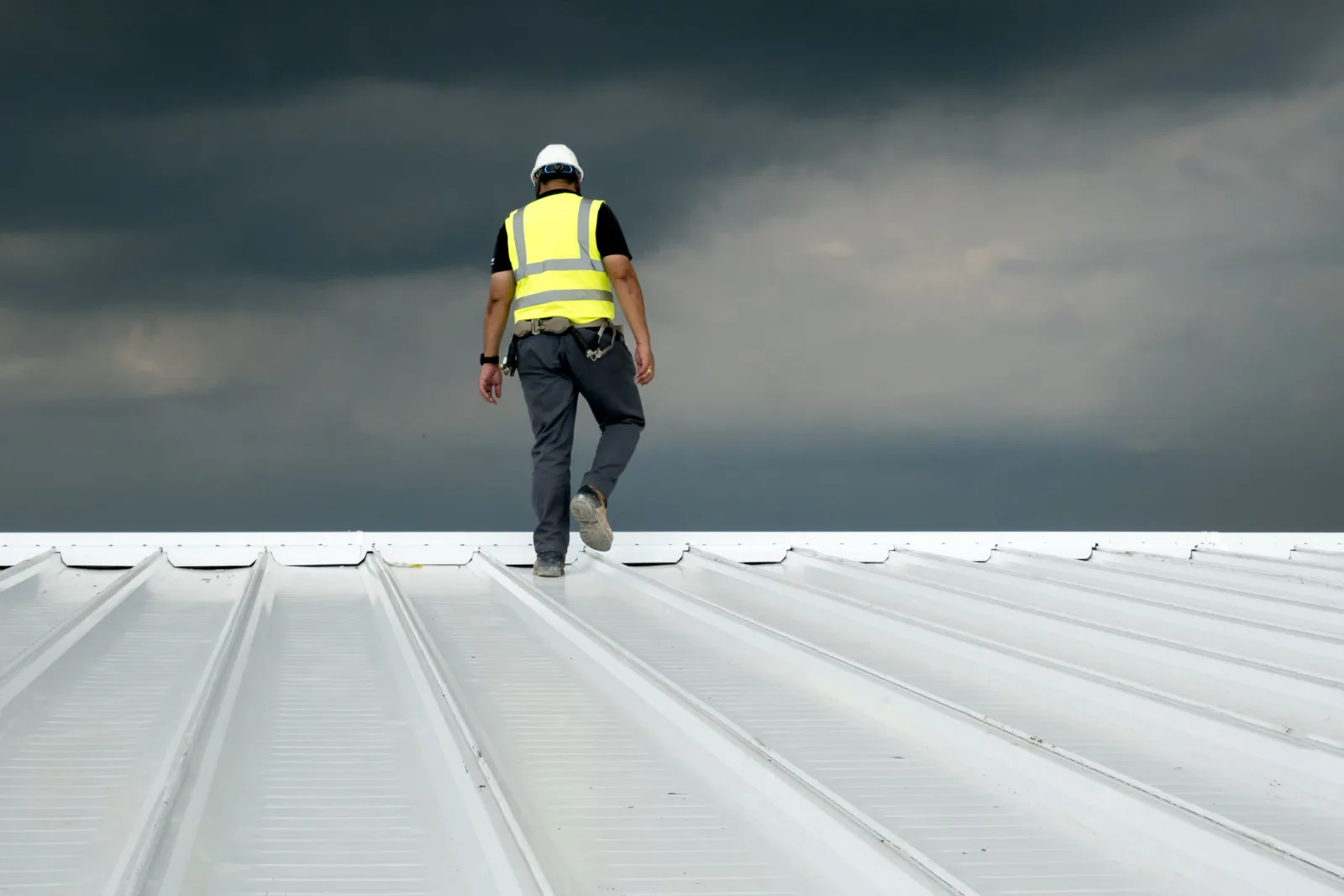
When a moisture boundary is uncertain, a test cut reveals the roof layers and insulation condition. We record where it was taken, what it showed and how the opening was restored. A dry area may remain if the system and project requirements allow. Wet insulation needs removal to a defined edge. Photographs and a roof sketch help the manager approve the correct extent. Our roof inspection identifies visible defects and any question that requires further testing.
If the leak follows a building edge, we examine the wall termination and any adjoining sheet metal. Water can pass behind a flashing when the top is loose or the lap no longer sheds runoff. We check the fastener line, seal condition and membrane turn-up as one assembly. The correction needs a stable substrate and a connection that will remain continuous through movement.
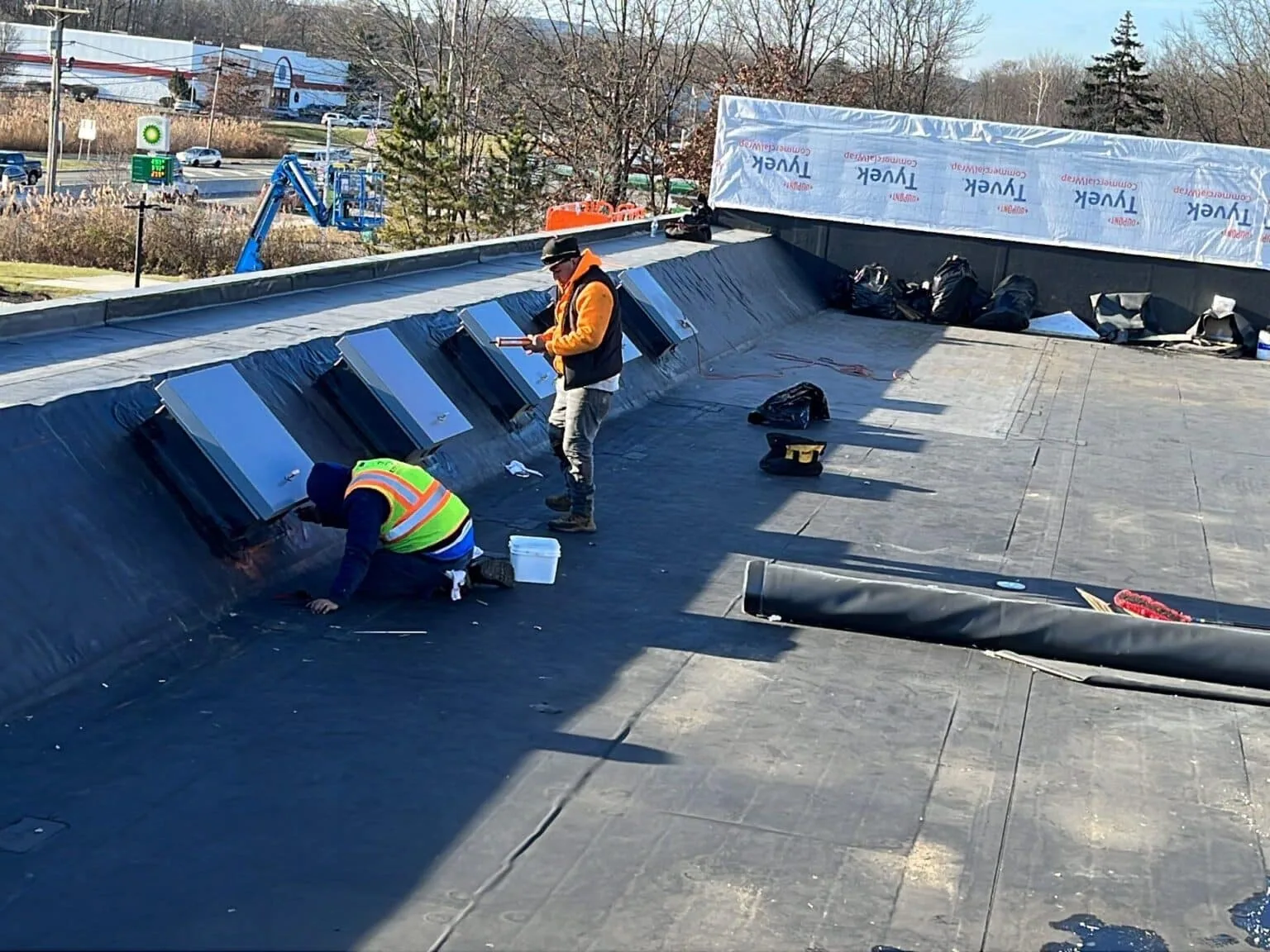
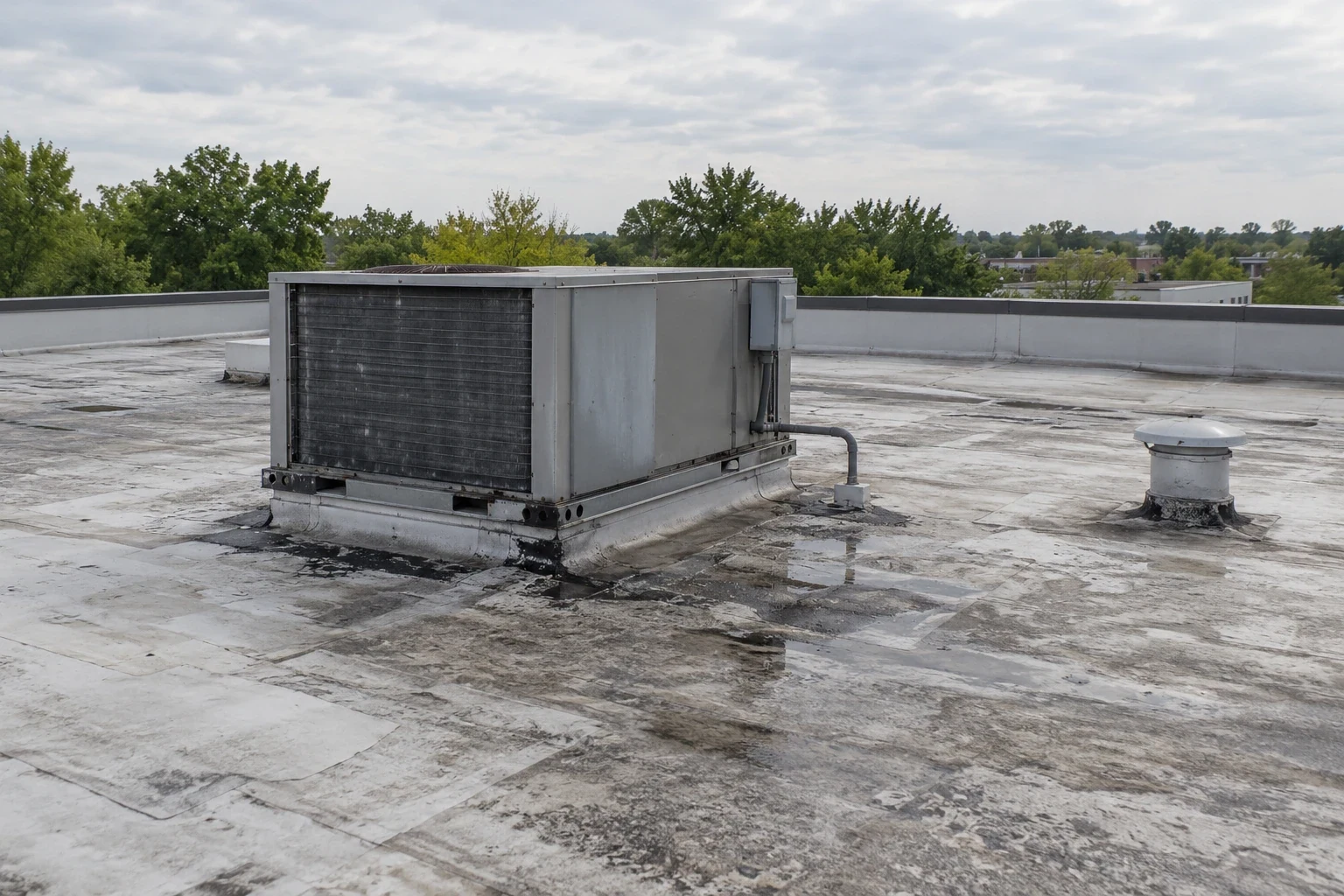
Repeated repairs around one curb may indicate a detail that was never reset. We remove failed material, confirm the curb is secure and rebuild the flashing with compatible layers. Where a new unit changed curb dimensions, the old repair may not align with current geometry. A roof plan that records those dimensions helps the next service vendor avoid drilling or fastening through a finished membrane.
Coordinate roof access before opening the assembly Schedule a commercial roof inspection on West Loop 306. Share guest or dining hours, access rules and leak history; we will document the roof and set repair boundaries.
West Loop 306 in San Angelo
Inspect seams where separate materials meet
Hotel roofs can include numerous curbs, vents, wall edges and service points, but each feature must be confirmed onsite. We check corners where a curb flashing joins the field membrane. Sealant, fasteners and lap direction all affect water entry. If equipment work has disturbed a roof detail, we note the condition before a repair is proposed. A new patch must tie to material that can hold a bond.
Metal edges need movement capacity. A termination fixed tightly may stress its seal as temperature changes. We inspect attachment, overlap and the adjoining membrane. Roofers also look for coating that has lost adhesion or become brittle at a transition. A coating should not hide a split or loose metal. We can map those areas and compare local repair with broader restoration. A commercial roof repair scope names the details that will be opened, resealed or replaced.
Hotel maintenance contacts may request access for more than one trade. We identify which roof areas must remain open for service and whether a walkway or protective pad is needed. After our repair, the access path is returned without loose fasteners or debris that could puncture the membrane.
West Loop 306 in San Angelo
Sequence work to protect access
Hotels rely on guest access, housekeeping and loading; restaurants coordinate supplies, waste and customer entry. A lift, pallet or debris chute can conflict with those routes. We walk the property with the manager before setting staging. Where a public entrance sits near the work zone, we agree on barriers and an alternate route. Work hours can account for check-in periods, deliveries or meal service.
A roof opening also affects the room below. We identify active water, sensitive contents and any area requiring ceiling protection. Tear-off follows the approved boundary, and the crew closes exposed roof before leaving. If a storm is approaching, the daily work area must be reduced to a section that can be secured in time. Our emergency service can contain active entry while a permanent repair is developed. The property manager receives a clear distinction between temporary protection and completed work.
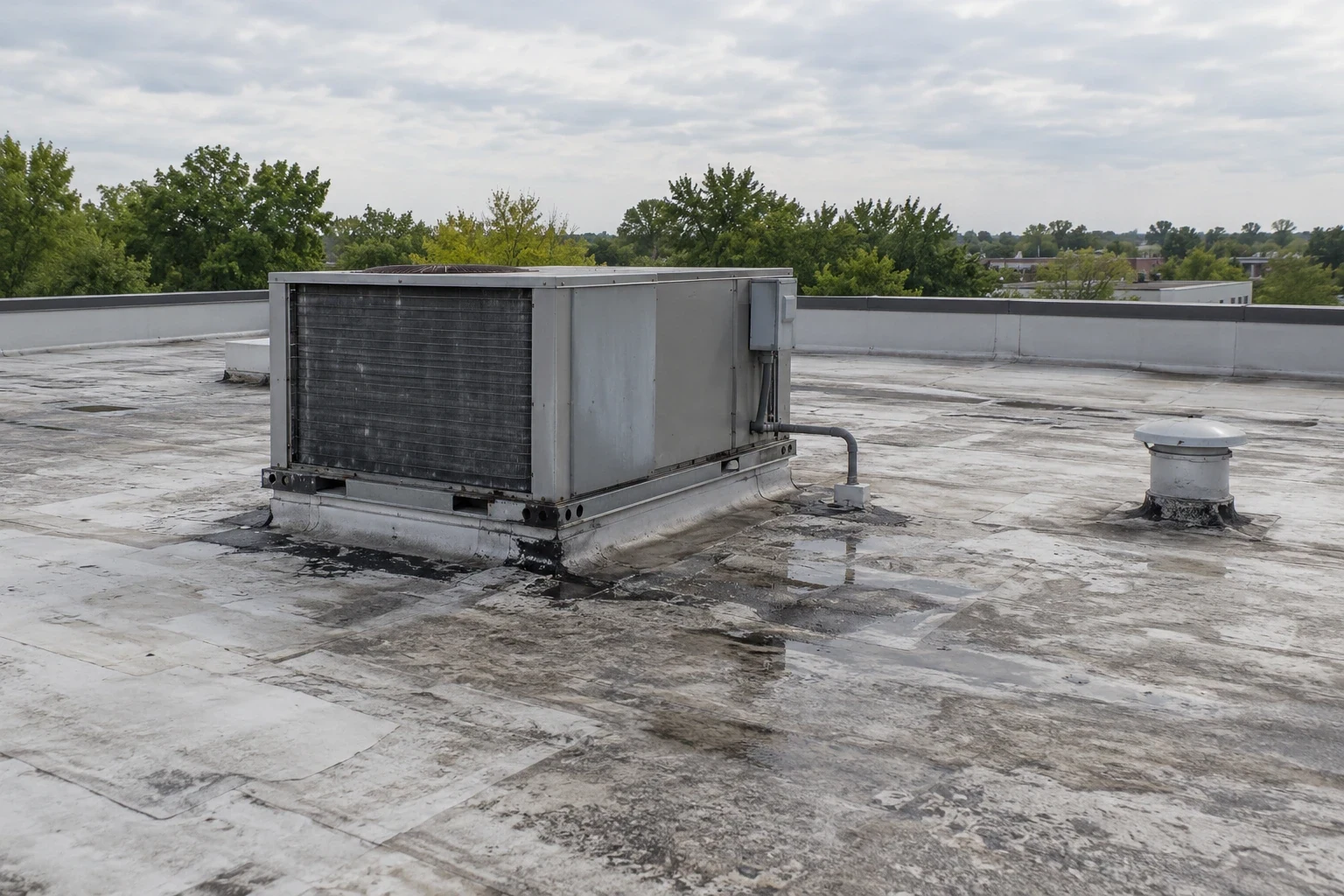
West Loop 306 in San Angelo
Compare material condition before adding a layer
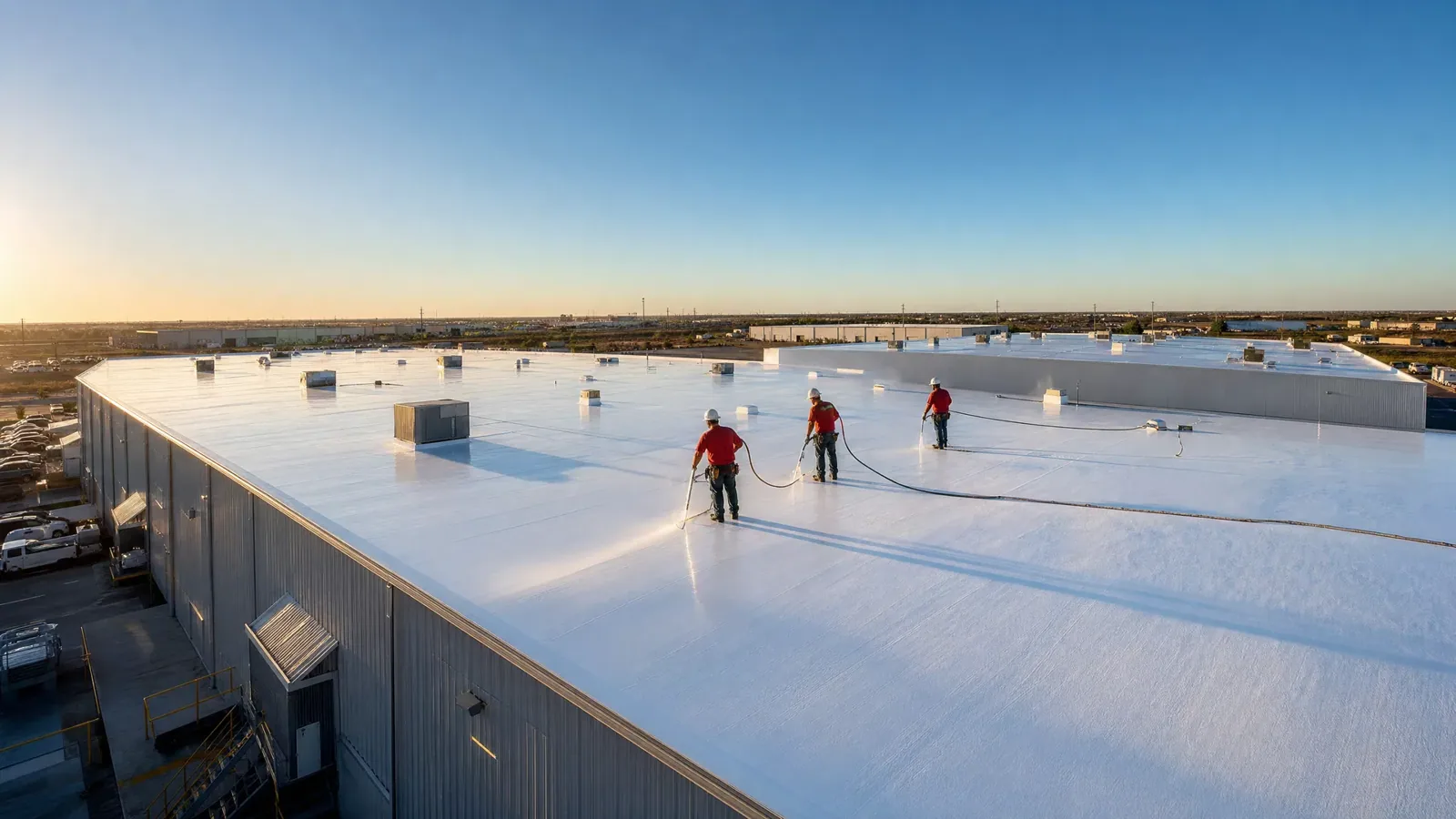
A local repair can restore service when failure is isolated and nearby membrane remains sound. Recover is a possibility only when attachment, moisture and project requirements support another system. A coating needs a compatible, clean and dry surface plus stable seams and flashing. Replacement is reviewed when wet insulation or bond failure reaches multiple sections. The inspection explains which condition led to each option.
San Angelo's National Weather Service normal for July precipitation is 1.10 inches. It is context for seasonal planning, not a measure of a specific roof's drainage. We check drains, scuppers and low areas to see where water actually moves. For a hotel, nighttime or guest-space impacts may shape project phasing. For restaurants, exhaust service and receiving routes may affect access. Price reflects the roof work, equipment, material removal and operating sequence. If the substrate qualifies, coating restoration is compared with localized repair or replacement after moisture and bond checks.
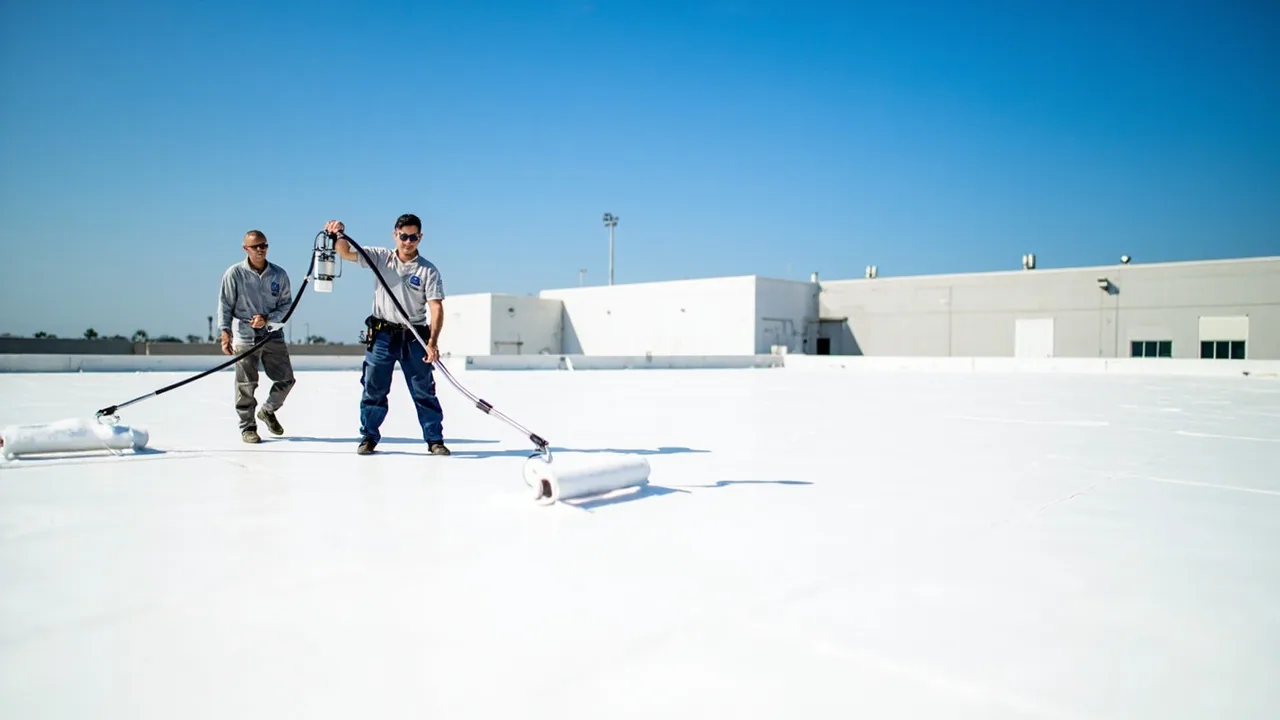
A coating estimate should identify preparation and repair separately. We check whether existing seams can hold a coating layer and whether the system requires reinforcement at transitions. The proposal lists the primer or surface treatment when needed and notes any detail excluded from the coated field. This prevents a surface restoration from being mistaken for replacement of failed flashing.
West Loop 306 in San Angelo
Leave records that support future service
We photograph the completed seam, curb, edge or drain. The record identifies the materials removed and the tie-in used. If concealed damage falls outside the approved amount, the manager receives documentation and a price before work expands. That keeps closeout aligned with authorization. Open items are listed separately, with the next inspection or repair step.
Before demobilizing, the crew confirms the roof is sealed, drains are clear and staging material is removed. Guest or dining access is returned as agreed. A maintenance visit can use the repair photos to check the same transitions later. The maintenance program can record changes between seasons. Managers comparing access plans may review the Southwest Boulevard corridor and Beauregard Avenue; those locations do not substitute for a roof inspection at the subject property.
The report also names any access limit that prevented a closer check, so follow-up can be planned without guessing.
Questions and answers
Questions About West Loop 306 in San Angelo
Can roof work be scheduled around hotel check-in?
Often, when access and noise can be separated from guest routes. We coordinate with management on lift placement, staging, housekeeping and daily close-in. The roof condition sets the actual sequence.
How does restaurant exhaust affect roof repair?
Exhaust equipment creates a roof penetration and may require vendor access. We confirm the equipment onsite, inspect its curb or flashing and coordinate any service visit before covering the detail.
Does a hotel roof usually need replacement?
The building type alone does not indicate roof condition. Moisture, attachment, seams, drainage and repair history determine whether local repair, recover, coating or replacement is appropriate.
What happens if testing finds more wet insulation?
We document the added area and explain its repair effect. The manager receives the quantity and price for approval before we expand the authorized scope.