Commercial Roof Flashing Failure Repair in San Angelo, TX
Roof Damage Repair
Commercial Roof Flashing Failure Repair at a Glance
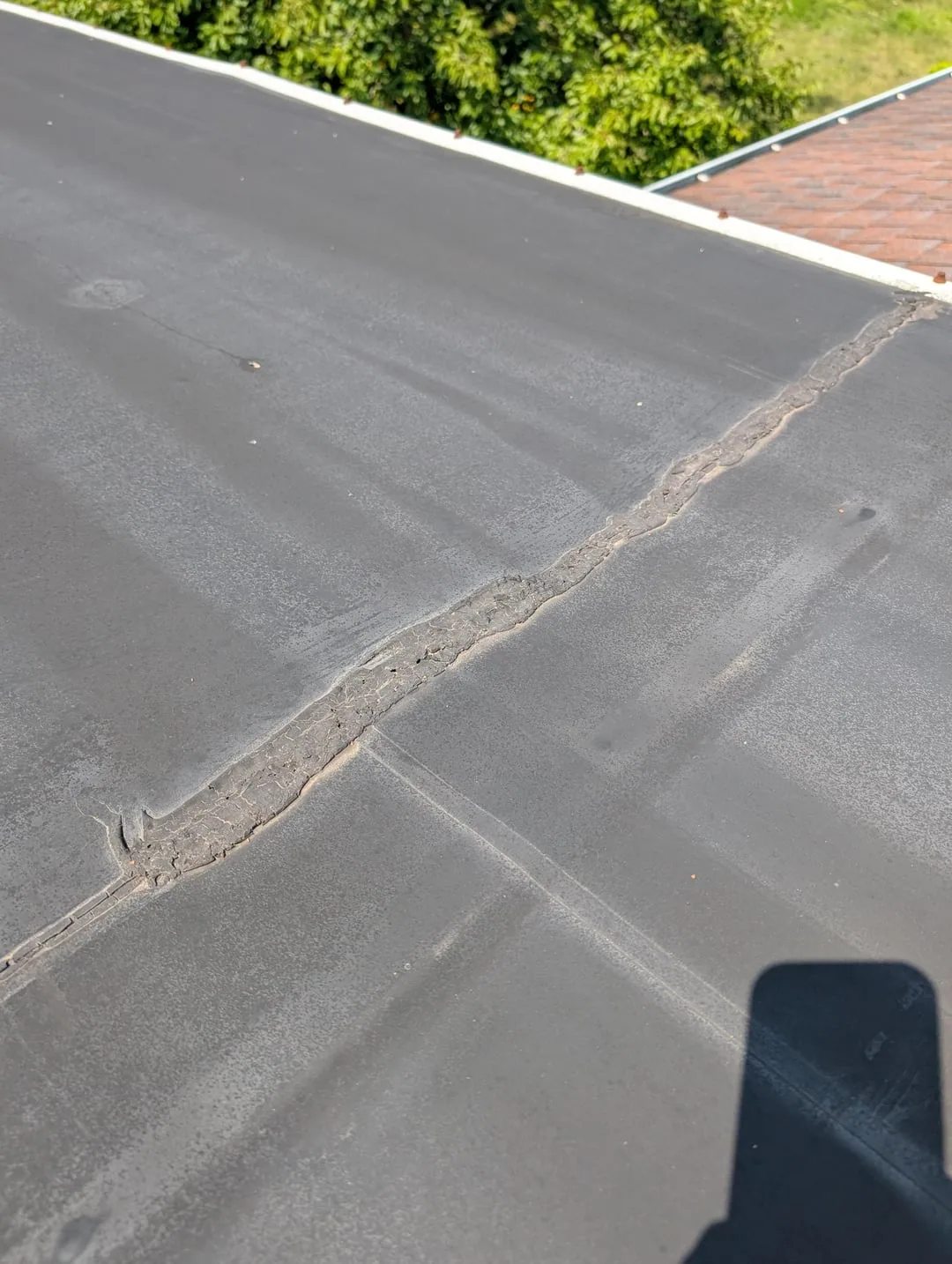
A lifted corner fold can leave an open channel beneath the flashing. Its correction needs access to the actual interface, not just the exposed lip. Commercial roof flashing failure repair in San Angelo, TX follows the installed material and corner construction. We examine the attachment, bond and support around the opening. A suitable repair should close the involved connection on sound construction without leaving an unsupported fold beneath new covering.
Beauregard Avenue has pharmacies, bakeries and restaurant operations. Knickerbocker Road includes hotels with dining and other restaurants. For roof-detail work above an occupied business, we identify actual equipment and contents beneath the removal. Commercial Roofers San Angelo examines and repairs commercial roof flashing. Assessment of failed corner and penetration connections defines the relevant material and access. The selected correction follows the physical detail rather than a general patch method applied across every raised component.
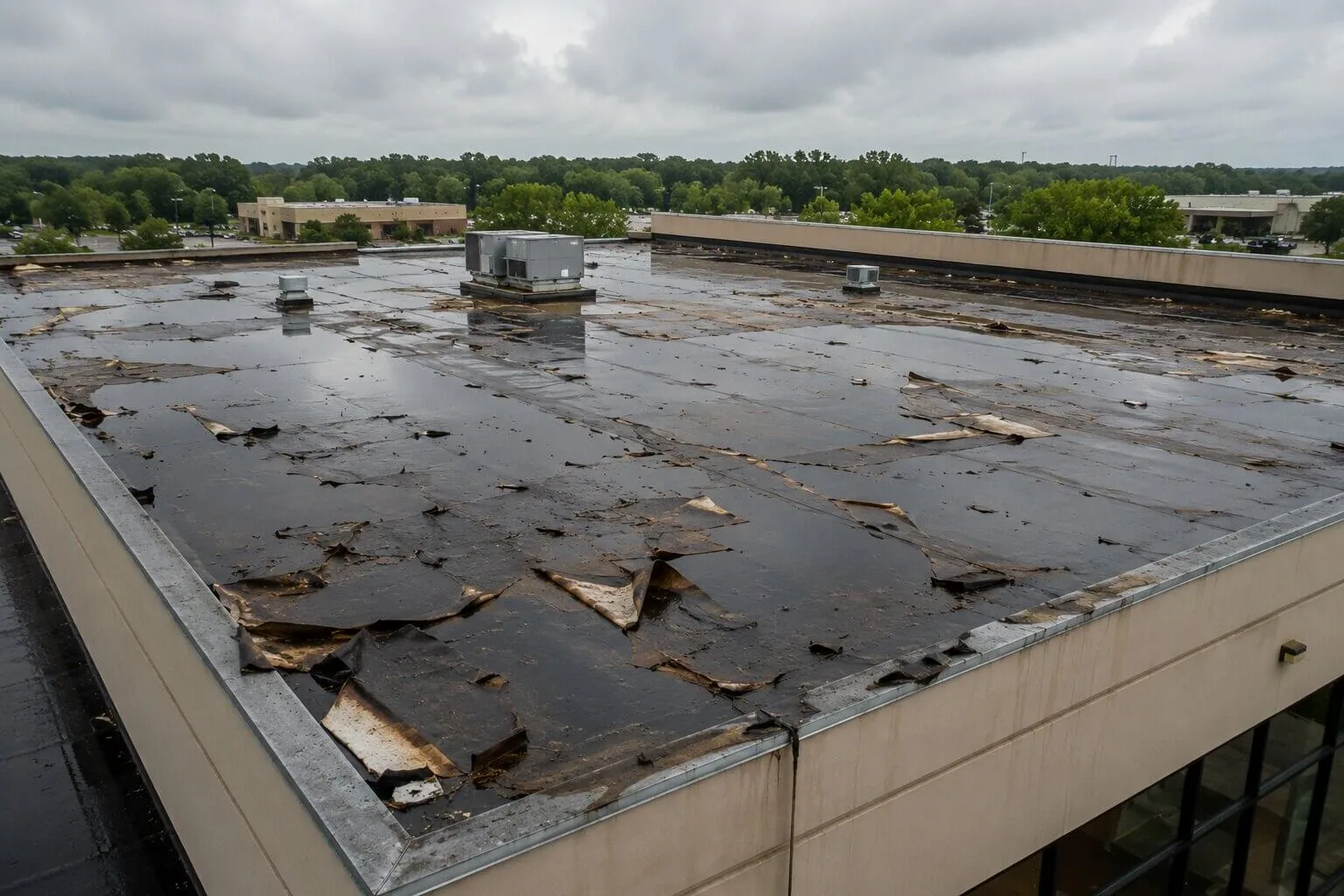
Commercial Roof Flashing Failure Repair
Expose the lifted fold before choosing the repair connection
A folded detail can conceal unbonded material, an open overlap or unsuitable support. We examine accessible edges and identify the construction beneath them. The selected method needs appropriate preparation and a compatible retained boundary. Cutting away or replacing involved material may be necessary. A new exposed bead should not be used to cover an interface that remains open behind it.
PVC roof flashing connection requirements follow the particular products and installed arrangement. Other membranes and metal details need their own compatible methods. We identify material and accessible support before defining removal. A proper corner correction should fit the geometry without leaving a strained or unsupported bridge. The new connection receives suitable examination according to the selected system requirements. Where an existing component prevents access, the sequence may require a coordinated service task. That should be identified before construction begins, so the completed weather detail reaches sound retained material instead of extending another patch across the same unprepared fold.
Assess the lifted flashing interface and repair access Arrange a detail review with open folds, termination changes and equipment restrictions identified. We will define the compatible material correction and supporting work needed beneath the repaired weather connection.
Commercial Roof Flashing Failure Repair
Check the termination and support above the loose flashing
A corner defect can coexist with an unsuitable wall termination. We examine the attachment and accessible supporting surface. Deterioration or movement can affect the connection beyond the visible opening. The correct detail must suit the wall and roof materials. A roofing seal cannot provide restraint intended for a separate supporting component. Specialist or another trade correction may be needed where the findings indicate it.
Assessment of aged flashing and exposed connections identifies material that may no longer accept the proposed preparation. We distinguish covering deterioration from attachment or support damage. Compatible correction should account for the actual movement and termination requirements. Repair of separated joins adjoining the flashing may involve another weather connection rather than the corner alone. The scope should locate those distinct defects and their retained boundaries. A sound field does not resolve unsuitable restraint at a raised detail. The repair needs the appropriate construction beneath its exposed weather material, with attachment and roof closure sequenced to suit the identified components.
Commercial Roof Flashing Failure Repair
Verify the involved layers beyond the open detail
A failed corner can admit water beneath apparently serviceable surrounding covering. We investigate suspect layers where the physical findings indicate involvement. Suitable confirmation establishes affected material and a sound retained boundary. The support may need additional examination when deterioration reaches it. The repair extent should follow those construction findings rather than only the width of the visible channel.
Examination of roof layers beside failed flashing directs verification and identifies the actual assembly. A localized correction can remain suitable where adjoining construction meets the detail requirements. Wider moisture or deterioration can increase removal and material handling. We define supporting correction before the new weather connection is closed. Building personnel can then locate the contents-protection area against the real exposure. Another component may require service coordination to reach the damaged layers. Those tasks belong in the scope, so the completed corner receives sound support and compatible retained connections instead of concealing wet or unsuitable material beneath a visually closed surface patch.
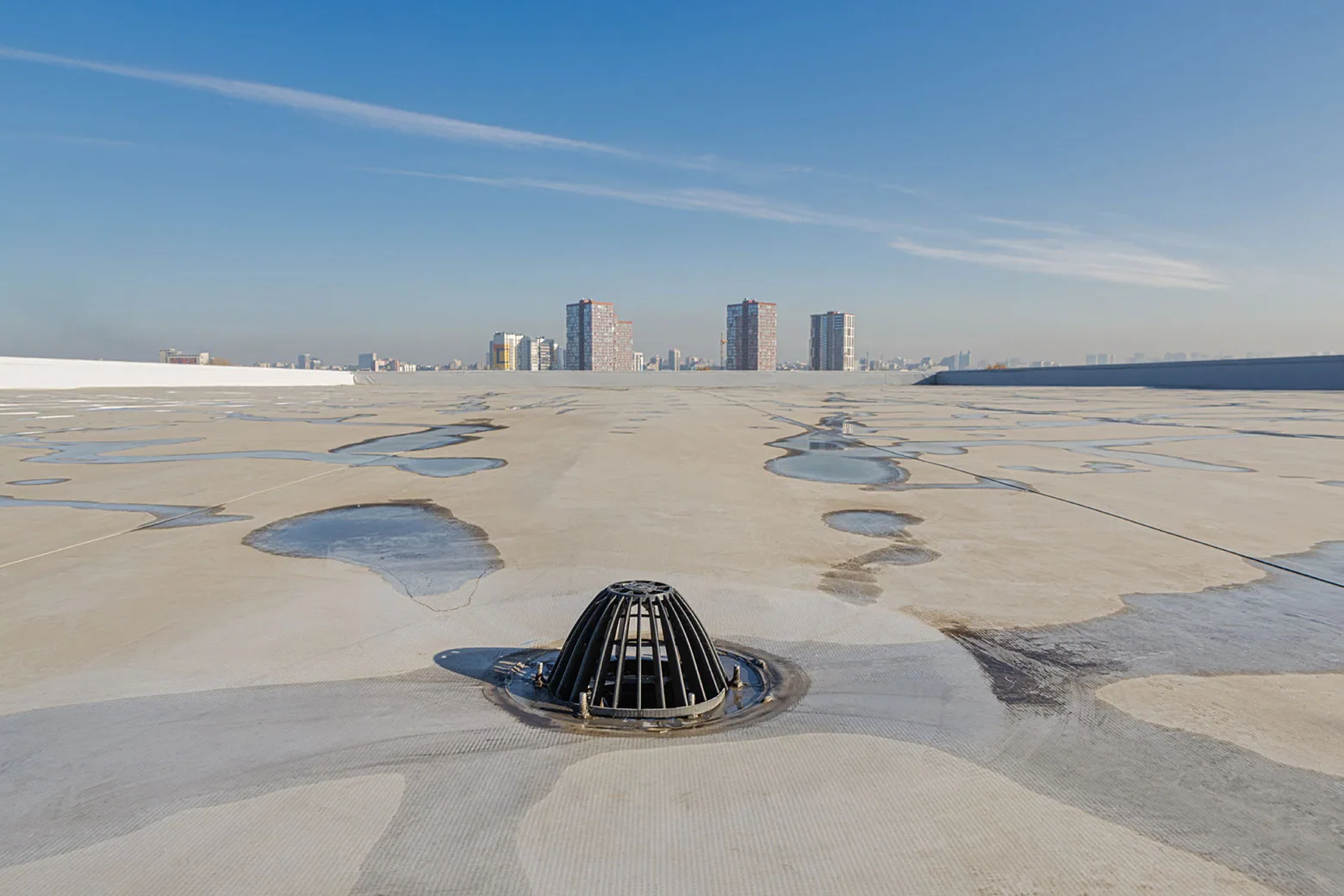
Commercial Roof Flashing Failure Repair
Arrange access beneath the equipment before rebuilding its flashing
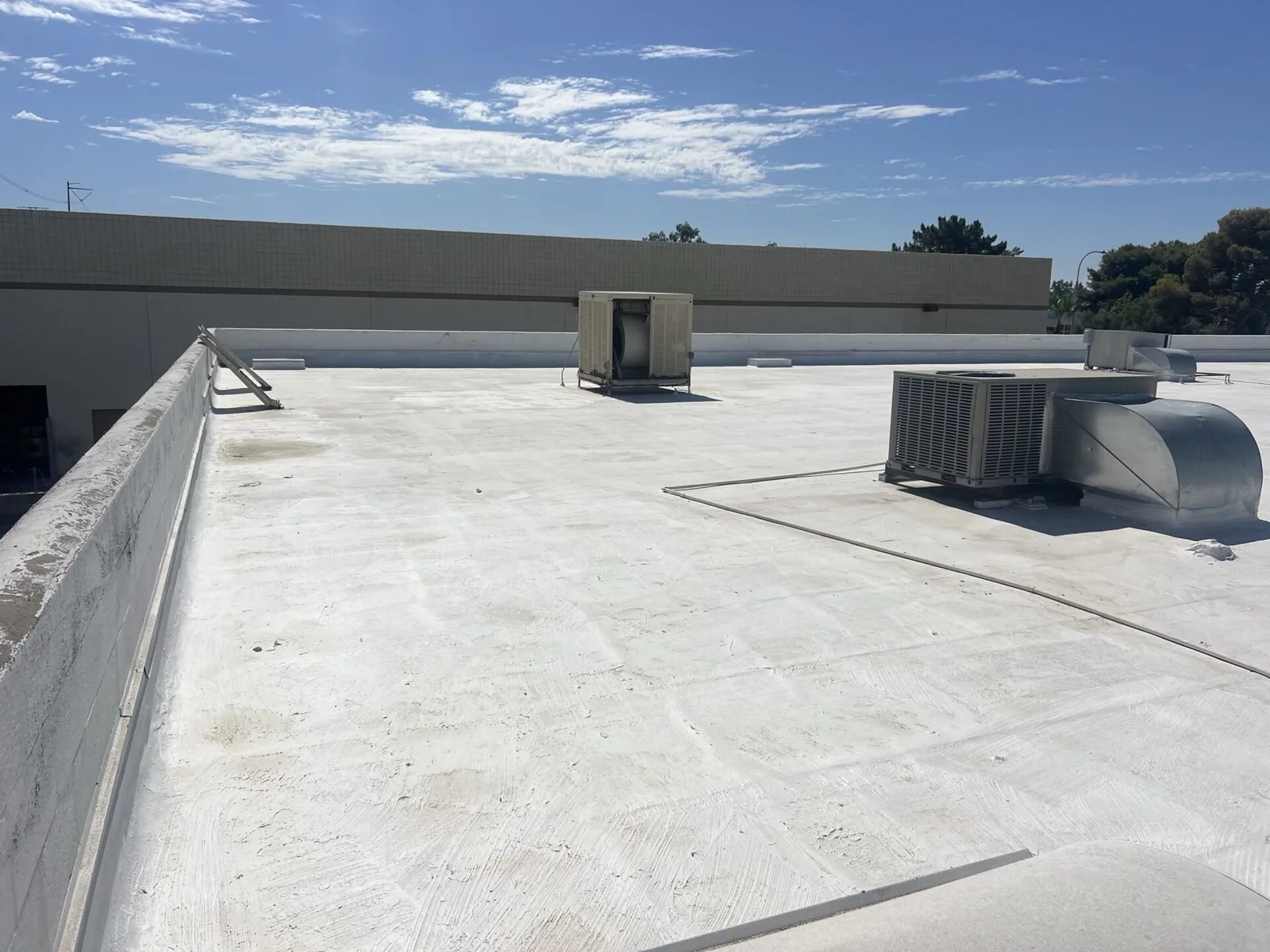
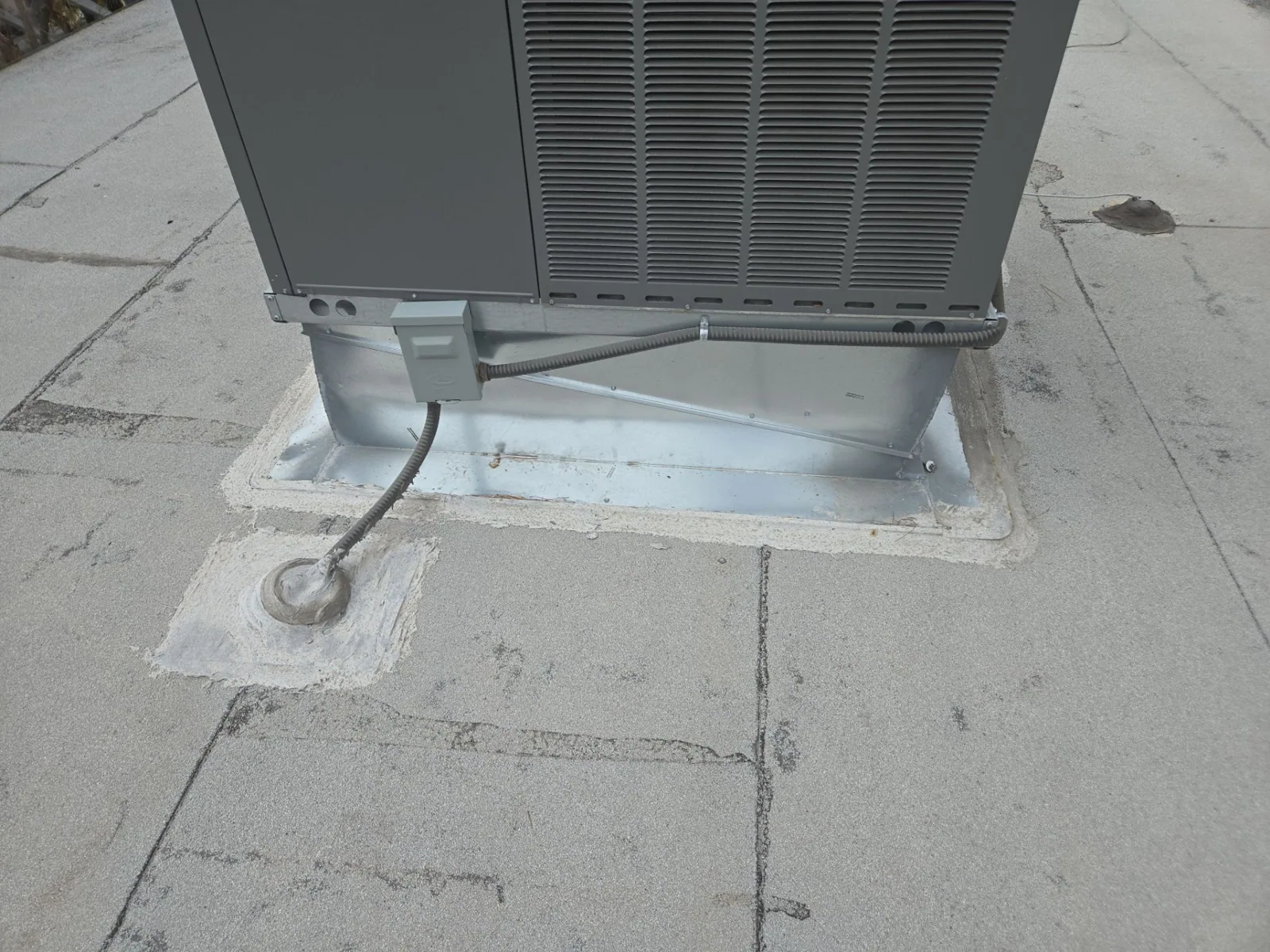
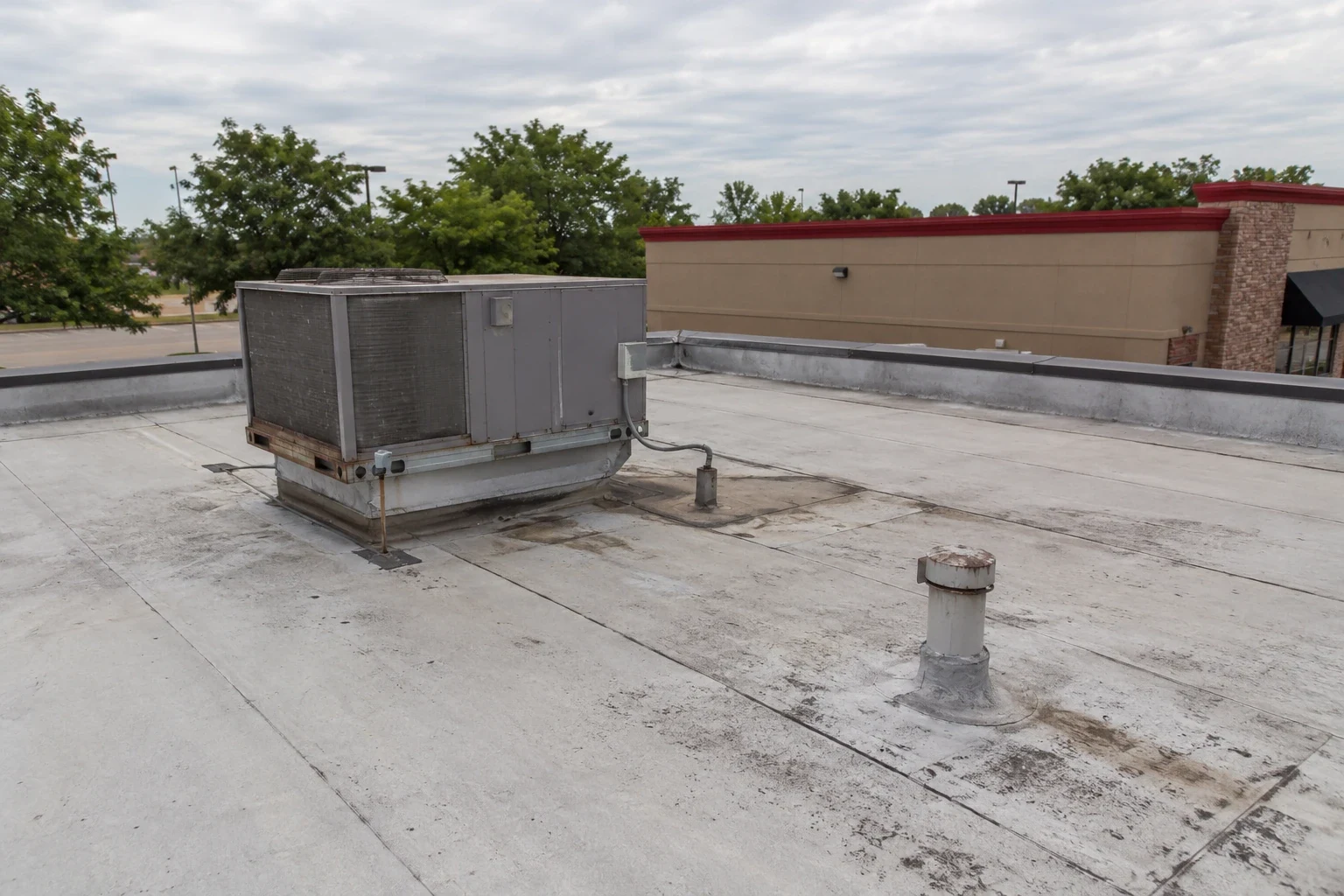
A rooftop unit can restrict preparation at the connection beneath its support. We examine the accessible detail and identify the service clearance needed. Lifting or another equipment task may be necessary to reach involved components. Equipment personnel specify operating limits and the resumption steps for that service. The roofing stage should provide enough access to complete the specified connection on suitable support.
Roof work at equipment-supported flashing details distinguishes material reconstruction from equipment service. We identify removal, preparation and examination needs for the actual roof system. For flashing correction above kitchen equipment and service space, hot flues or exhaust contact can require a different component arrangement. The physical exposure guides compatible material selection. Staff coordinate affected room and equipment restrictions against that task. A new surface seal is not the equivalent of rebuilding damaged material concealed below a unit. The sequence should reach the involved interface and restore its weather connection before ordinary rooftop service resumes.
Commercial Roof Flashing Failure Repair
Examine the rebuilt corner and its adjoining water route
A completed flashing correction needs examination of accessible edges and transitions. We check the installed connection using the relevant system requirements. The new shape should preserve intended drainage and future detail access. A service component moved later can damage or obstruct the corner again. That changed condition requires assessment at the actual contact point.
For roof flashing work near the Beauregard Avenue Corridor, site personnel establish the occupied room and construction routes affected. Completion of the compatible flashing correction should identify repaired components and retained boundaries. Staff can report new leakage or altered equipment contact after another service task. We examine those current findings rather than automatically repeat the previous corner method. A new defect can require a different preparation or supporting correction. Clear completed-work locations help define that next task, with material removal and occupied access coordinated for the actual roof component now needing attention.
Questions and answers
Questions About Commercial Roof Flashing Failure Repair
Can an exposed bead close every lifted flashing corner?
Expose and assess the actual interface before choosing the method. A lifted fold can conceal unbonded material, an open overlap or unsuitable support. We define compatible preparation and retained boundaries. The completed repair should rebuild the involved connection rather than place a new seal over an opening that remains behind the visible corner edge.
Why check a wall termination when the visible defect is at its base?
Examine attachment and movement at the raised connection. An unsuitable termination or damaged support can affect the adjoining flashing. We distinguish those components from the exposed covering defect. The selected correction should fit the actual roof and wall construction, with another trade or specialist task coordinated where supporting conditions require it before weather closure.
How does wet material beside failed flashing change the repair extent?
Verify the involved layers and identify a suitable retained boundary. Water can affect support beyond the exposed corner channel. We define removal and rebuilding through the physical findings. A localized task can remain appropriate where neighboring construction is serviceable, but involved material needs correction before the new flashing covers the surrounding area.
What if a rooftop unit blocks access to the damaged flashing?
Identify the clearance and service task needed to reach the interface. Responsible equipment personnel establish operating restrictions and restart requirements. We define the roofing preparation and closure stage around that arrangement. The repair should complete the specified weather connection on suitable support, without relying on a surface bead around an inaccessible damaged component.
Which changes should be reported after a roof corner has been repaired?
Locate new leakage, displaced equipment or visible contact damage near the connection. We examine the current material and adjoining details. A changed service arrangement can require another compatible correction. The next task follows actual findings, with supporting investigation and occupied-space access coordinated when further removal is necessary rather than assuming the earlier corner repair should be repeated.