Drone Roof Inspection in San Angelo, TX
Commercial Roofing Services
Drone Roof Inspection at a Glance
Shadow from a raised curb can conceal a small flashing opening. A second camera angle changes what the inspector can see. Drone roof inspection in San Angelo, TX uses that viewing choice deliberately. We collect images suited to the roof question being examined. Overhead coverage locates visible conditions across the building. Closer angled views help identify details that need direct access.
Commercial Roofers San Angelo provides drone imaging alongside roofing assessment. The method is useful for large sections and difficult access positions. Manufacturing and distribution occupy the San Angelo Business & Industrial Park. Imaging for a building in that setting can help locate work zones. We connect each observed condition with the roof section and operating area below. The next step can then be a targeted hands-on inspection rather than an undirected walk across the entire surface.
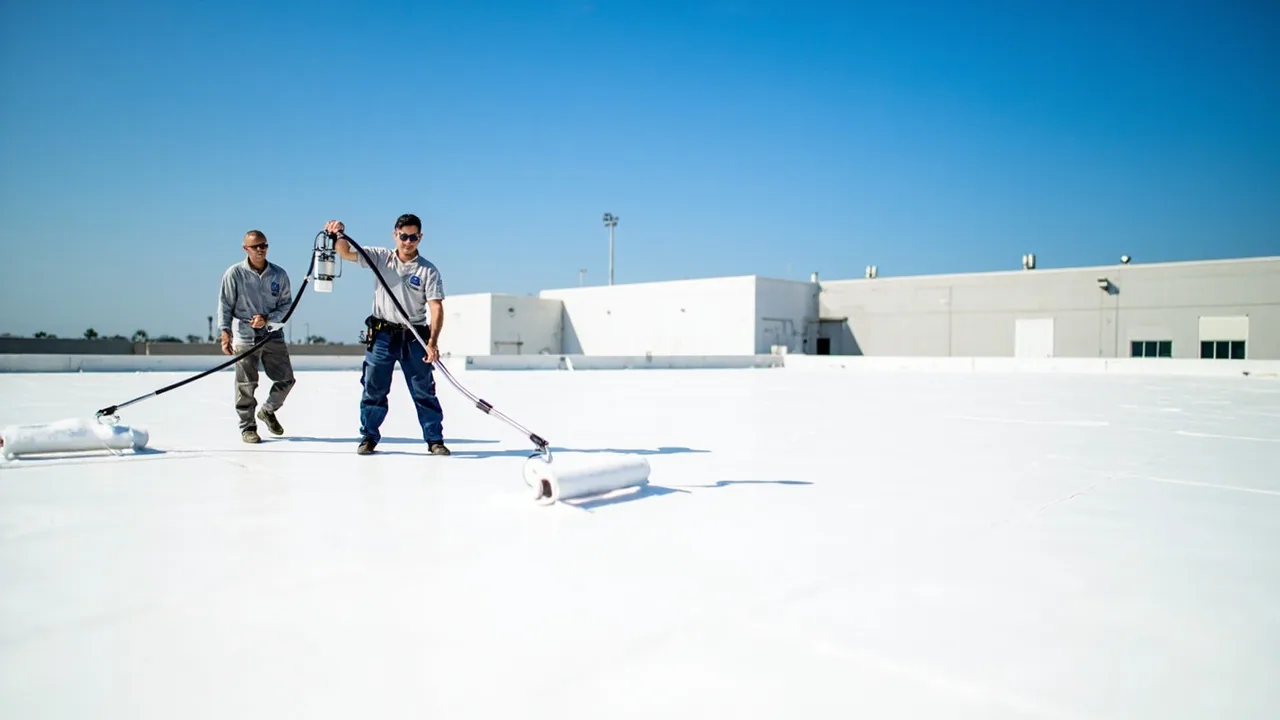
Drone Roof Inspection
Choose views that separate defects from shadows
A straight-down image shows layout but can hide vertical flashing. We combine overhead coverage with oblique views where practical. Camera position changes glare on metal and reflective membrane surfaces. Sun angle also affects the visibility of wrinkles and displaced components. The inspection plan accounts for those differences before capture. A useful view shows both the detail and its surrounding construction.
We examine image clarity before using a distant mark to direct work. Debris, surface staining and small openings can appear similar at low resolution. Closer observation helps separate them where flight and visibility permit. Repeatable reference features help locate the condition on the roof. Curbs, drains and roof-section changes can serve that purpose. The property manager needs to know which building area is affected. The image set should establish that location without requiring staff to interpret an unexplained collection of similar-looking roof photographs.
Identify the area that needs an overhead view Share the building layout and the defect or access question before booking imaging. We will plan useful camera views and the roof-level checks needed afterward.
Drone Roof Inspection
Read the pattern across connected roof sections
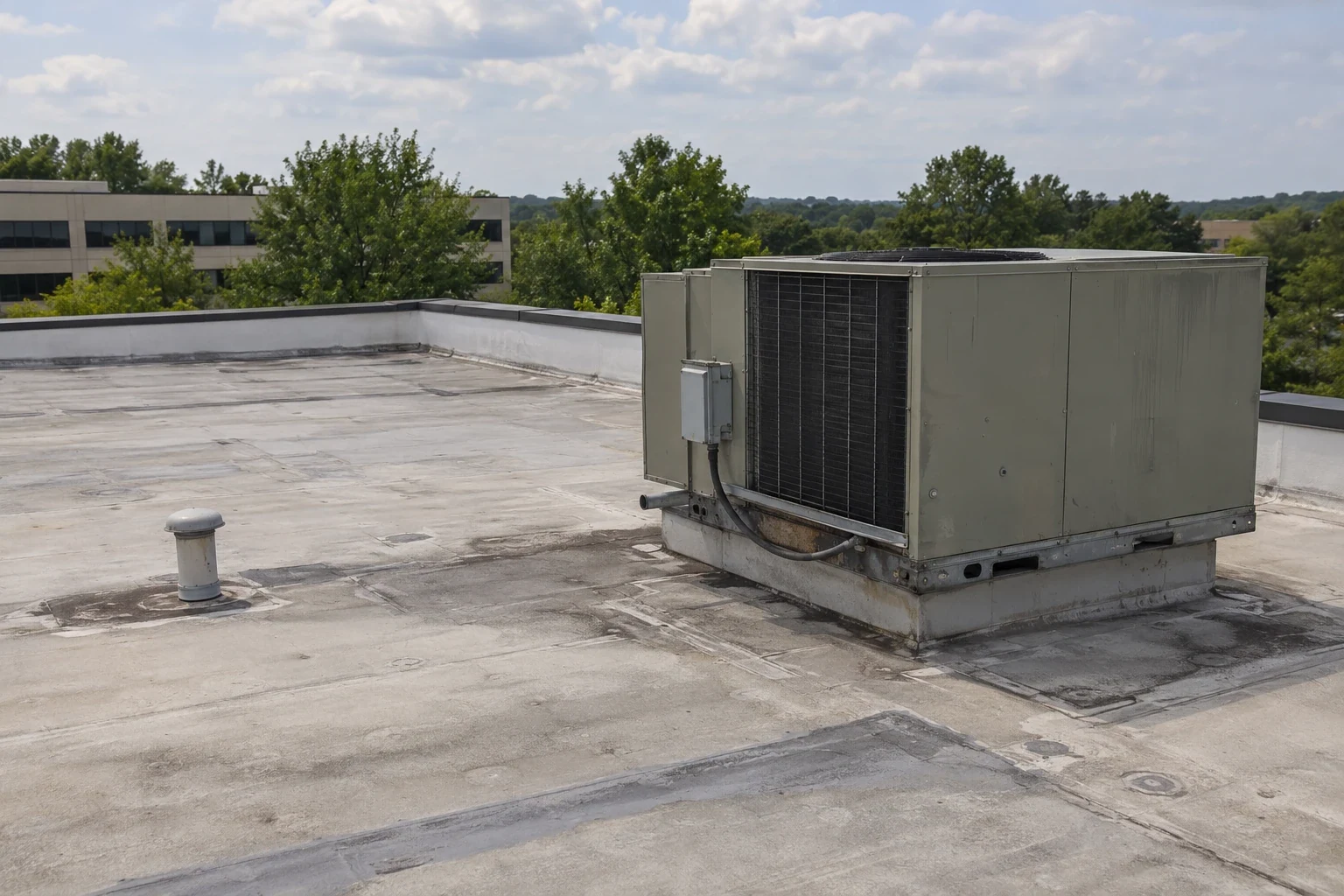
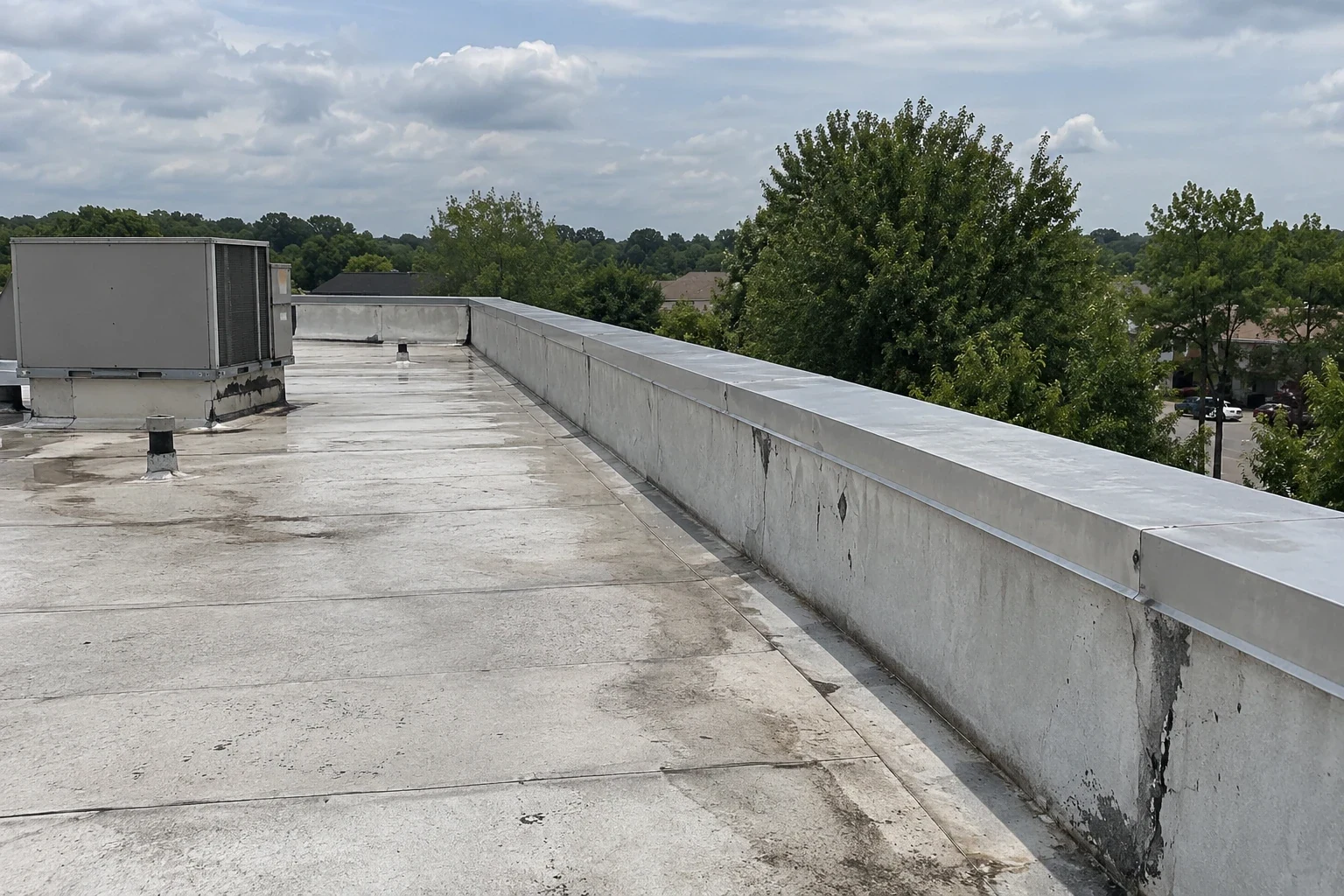
Several depressions aligned beside equipment can suggest a drainage problem worth measuring. Images help locate that pattern and its nearby outlets. We look for debris accumulation, displaced sheet metal and visible membrane damage. Roof additions can have different heights or interfaces with the original section. Their connecting details deserve a separate viewing sequence. An apparent surface line can represent a seam, repair boundary or change in construction.
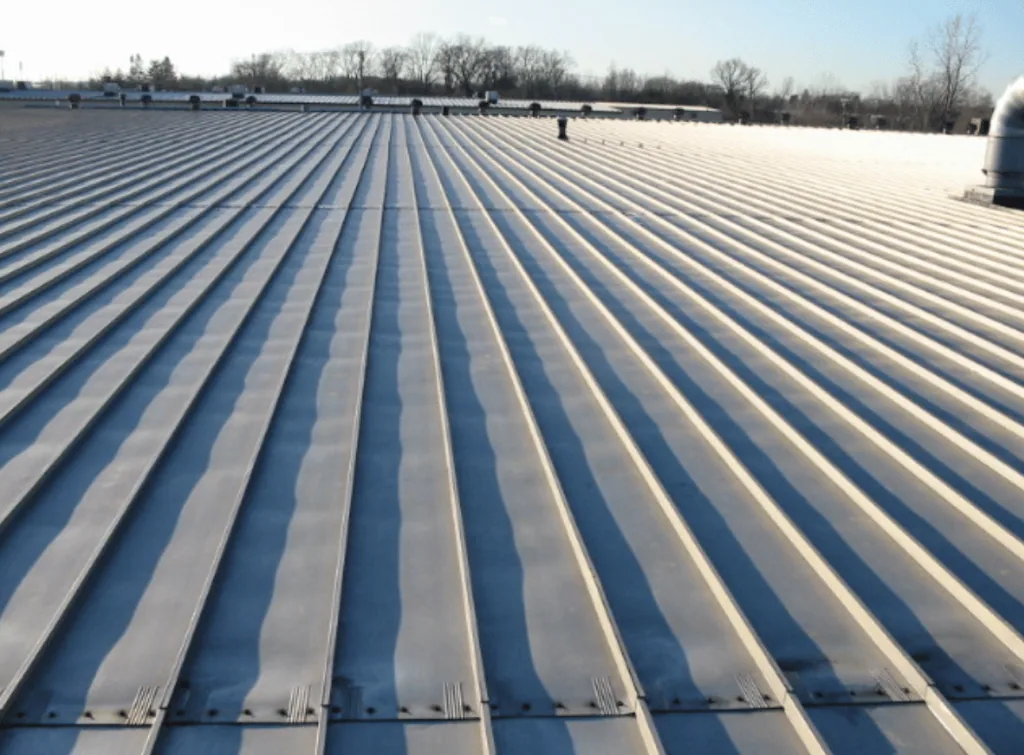
Drainage outlet assessment adds physical checks where water collection appears concentrated. Aerial observations help choose the locations for those checks. We do not infer the deck slope from color variation. Measurements and assembly inspection establish the cause of a persistent low point. For standing-seam metal roofs, images can show displaced panels and interrupted lines. Attachment condition needs closer examination where it controls the correction. The viewing method and the physical test should serve the same defined roofing question.
Drone Roof Inspection
Plan the flight beside an occupied building
People, vehicles and overhead obstacles affect the safe capture area. We review the property layout with the manager before arranging flight. Airspace, flight permissions and applicable operating requirements need assessment for the location. Conditions must allow a safe takeoff, landing and observation position. Wind or poor visibility can require another capture window. The inspection sequence remains subject to those actual operating limits.
Downtown San Angelo contains commercial and residential properties with dining and shopping. A drone assessment for a property there needs attention to neighboring users. We coordinate the building access and ground working area without assuming control of adjacent property. Occupied office buildings may have entrance activity beneath the proposed observation area. Staff needs to understand where the inspection will take place. Rooftop equipment operators should also know the capture schedule. These arrangements allow useful imaging while preserving the access necessary for the businesses and residents around the building.
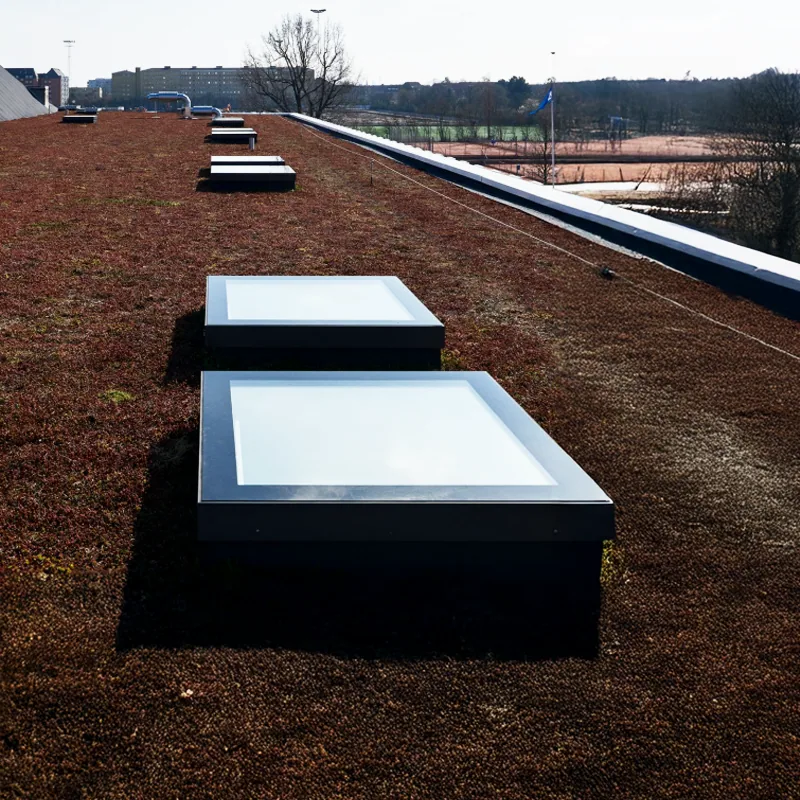
Drone Roof Inspection
Reserve physical tests for connections that carry the repair
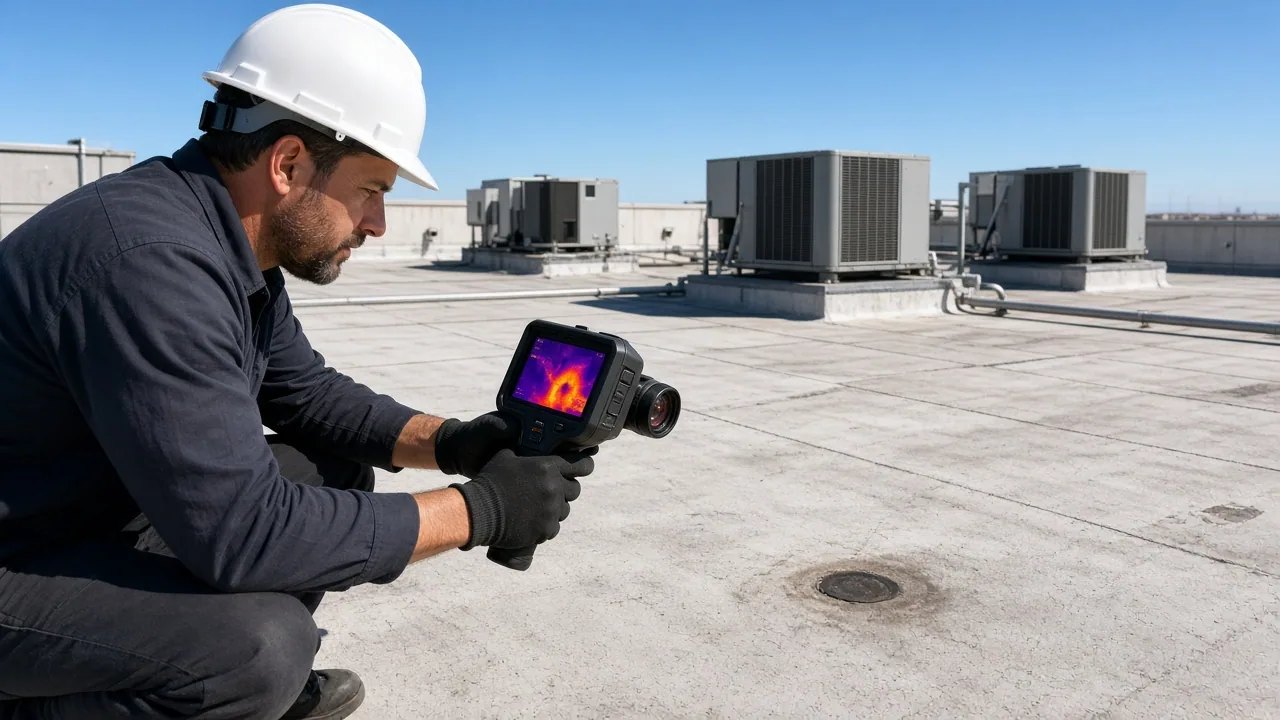
Visible seam separation can direct a close inspection of the joining surface. A seam probe then checks an accessible edge. Bond strength and underlying moisture require methods other than ordinary photographs. We identify those questions during review of the images. Thermal moisture screening with confirmation tests can investigate selected suspect sections. Thermal capture has separate weather and assembly requirements from visible-light imaging.
Drone coverage also helps plan safe access for selective openings. The image can locate a section, equipment obstacle and nearby exit route. The roof condition still determines whether people may enter that section. An unstable deck concern requires evaluation before walking or test cuts. We arrange the necessary assessment instead of treating remote viewing as permission to access it. The value of imaging lies in focusing those next steps. It can reduce unnecessary searching while preserving the direct checks needed for an attachment, moisture or structural decision.
Drone Roof Inspection
Capture change before repair conceals it
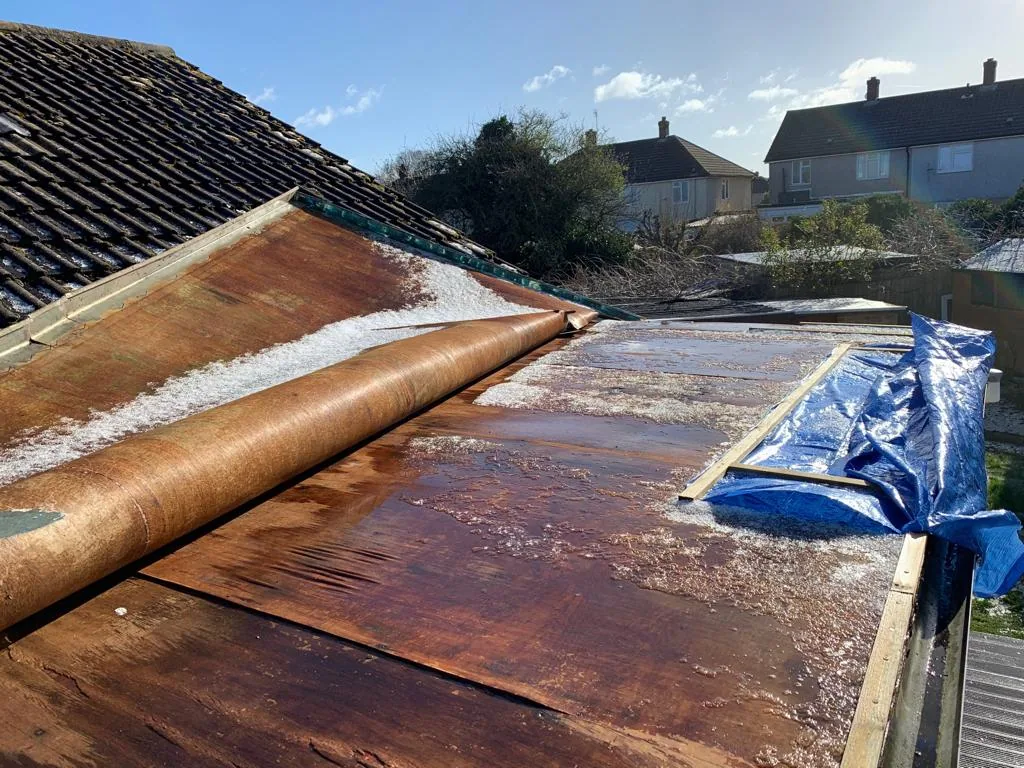
Storm-related displacement is useful to record before damaged components are removed. We collect images when conditions permit safe operation. The photographs show the condition and its position at capture. They can supplement direct examination during storm-damage repair planning. Roof-level photographs may be necessary for details obscured from above. The combined record should distinguish overall layout from close physical findings.
Images taken after correction can show completed sections and debris removal. Comparison works best when views use recognizable roof features. The photograph sequence can document progress without attributing concealed performance to appearance. Managers handling roof work across several sections can compare the area completed with the agreed scope. Material receipts and direct detail checks remain useful alongside that visual record. Imaging should answer the construction question at hand, such as locating an unfinished transition or confirming where temporary protection remains, instead of generating pictures unrelated to a repair decision.
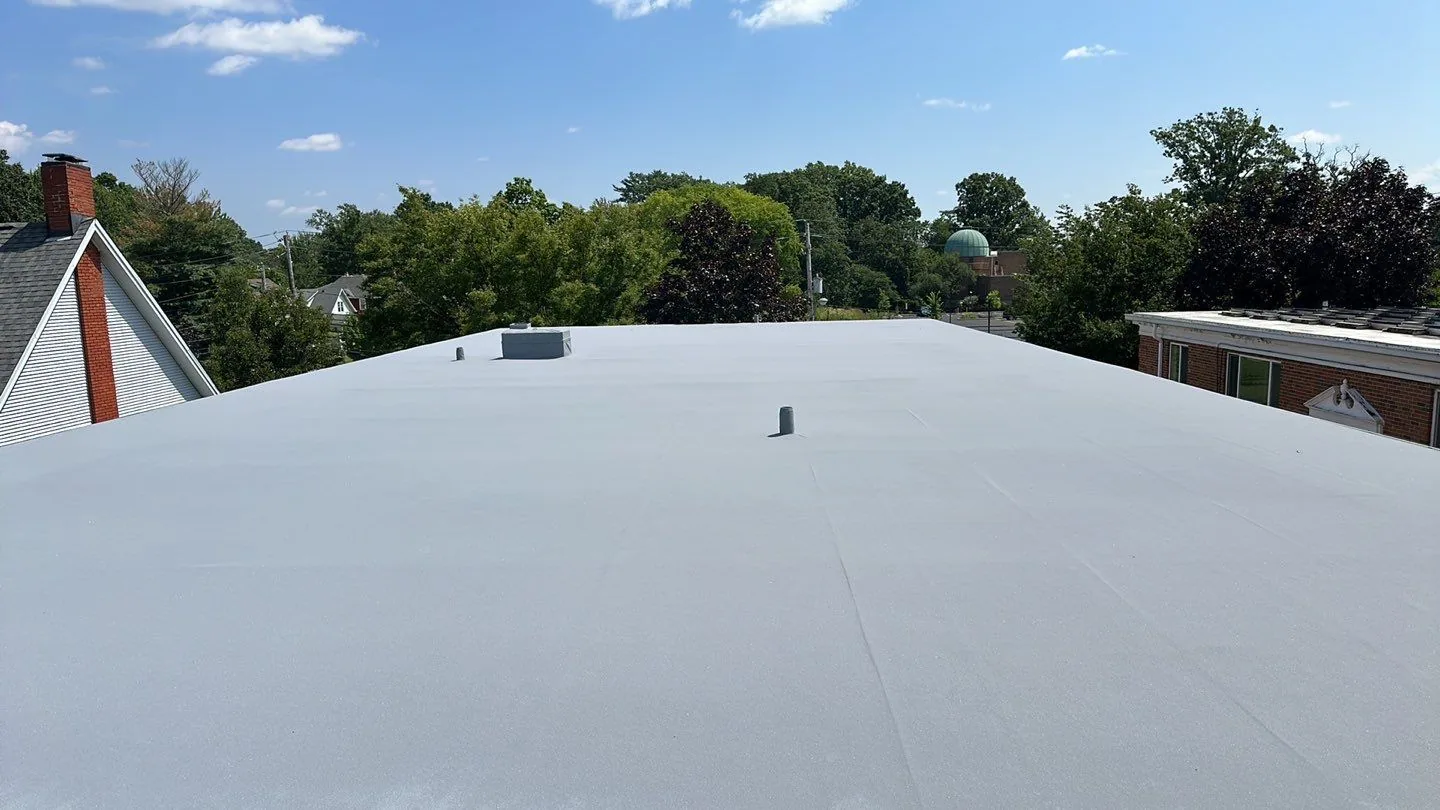
Drone Roof Inspection
Use the roof layout to coordinate the next visit
The Sunset Drive Corridor includes grocery operations and shopping-center food uses. A building in that mix can have several operational areas beneath one roof. Overhead images help align those areas with equipment and repair positions. We discuss the occupied rooms with the property manager during review. A suspected defect over food preparation may need a different access sequence from one over storage. That distinction should guide the next physical inspection.
Commercial roofs in the Sunset Drive area still need their actual assembly identified. Image review can show where access or a detail test is necessary. It also helps identify the equipment trade needed at a particular curb. The manager can coordinate a focused visit with the appropriate building staff present. We retain the connection between the image location and the proposed action. That turns overhead coverage into a practical access and repair plan rather than an assumption that every visible mark needs the same treatment.
Questions and answers
Questions About Drone Roof Inspection
Can drone imaging locate a small puncture reliably?
Visibility follows image resolution, lighting and the position of the opening. We select closer views where safe flight permits. A small mark may still need direct examination to establish its nature. Imaging helps locate the suspected area, while the repair decision follows the material condition found there.
Will you fly while customers enter the building?
The flight plan needs assessment against ground activity and applicable operating rules. We review entrances, working areas and neighboring access first. Capture may require a different schedule or restricted ground position. The goal is useful observation within a safe arrangement, rather than forcing flight into a busy operating period.
Does an aerial image show whether insulation is wet?
Ordinary visible-light photographs do not establish concealed moisture. Thermal screening can identify patterns under suitable conditions, followed by physical confirmation. We choose that additional testing when moisture extent affects the correction. Surface discoloration alone is not a sound basis for assigning insulation removal across a roof section.
Can photographs help track several repair phases?
Comparable views can identify completed sections, remaining temporary protection and visible unfinished details. We locate those views against fixed roof features. Direct inspection still checks the joining and flashing construction. Using both records helps the manager understand progress without treating an overhead image as a substitute for detail acceptance.
What makes a second capture necessary?
Glare, obstruction or unsuitable weather can leave a detail poorly shown. We identify the missing observation before arranging another flight. A revised angle or capture time may resolve it. Where imaging remains inconclusive, direct access is the appropriate next method. The choice follows the roofing question still unanswered.