Commercial Roofing in Belaire District, San Angelo, TX
Service Areas
Belaire District at a Glance
A roof repair needs a defined boundary where perimeter metal, wall flashing or a membrane edge meets the field. In the Belaire District, the crew checks attachment, movement clearance and material condition before selecting a lasting tie-in. Belaire provides a neighborhood reference for dispatch, while inspection of the roof itself defines the work boundary. The owner names the building contact, access point, work window and person who may authorize a test opening. We trace the visible condition to sound material, record dimensions and show where work stops. The proposal separates preparation and fastening from an allowance for concealed deterioration. Before removal extends, measurements and photographs go to the approving contact. A commercial roof inspection can document the transition and next decision.
Belaire District
Verify water entry before dispatching a repair
Before a service visit, the manager can note which room is affected, whether the leak is active and what roof work occurred recently. Water may move along insulation or framing before reaching the reported ceiling, so we inspect adjoining seams, edges and penetrations rather than stopping above the stain. A leak repair should identify the likely entry and the receiving material for a permanent tie-in. If no roof opening is visible, the report notes that result and considers another source or a limited diagnostic test. We do not price a broad tear-out from an interior symptom alone. The site contact also tells us whether contents, electrical equipment or a public path need temporary protection. For an active opening, a separate emergency scope can secure the area while ownership approves permanent work. The dispatch record lists what information is still needed before a crew can complete the repair in one mobilization. Roof records are especially useful when ownership changes or several contractors have worked on the same area. We compare invoice dates, repair descriptions and any available assembly drawings with conditions on the roof. If a past invoice says a seam was repaired but the material is now lifted beside it, the inspection distinguishes the old work from the new failure. We do not assume the earlier contractor used a particular product unless records show it. The current estimate describes preparation needed for the receiving surface and identifies any treatment that must be removed. If records conflict with what is visible, we note that difference and request the owner's decision before opening a new layer. A dated photo set gives the next reviewer a clear baseline and reduces confusion about which patch or zone the proposal addresses.
Set the Belaire District repair approval path Send the property location, roof concern, available records and contacts for access and approval. We will inspect the reported area and identify included work, timing and any test allowance.
Belaire District
Assess drains, outlets and surrounding slope
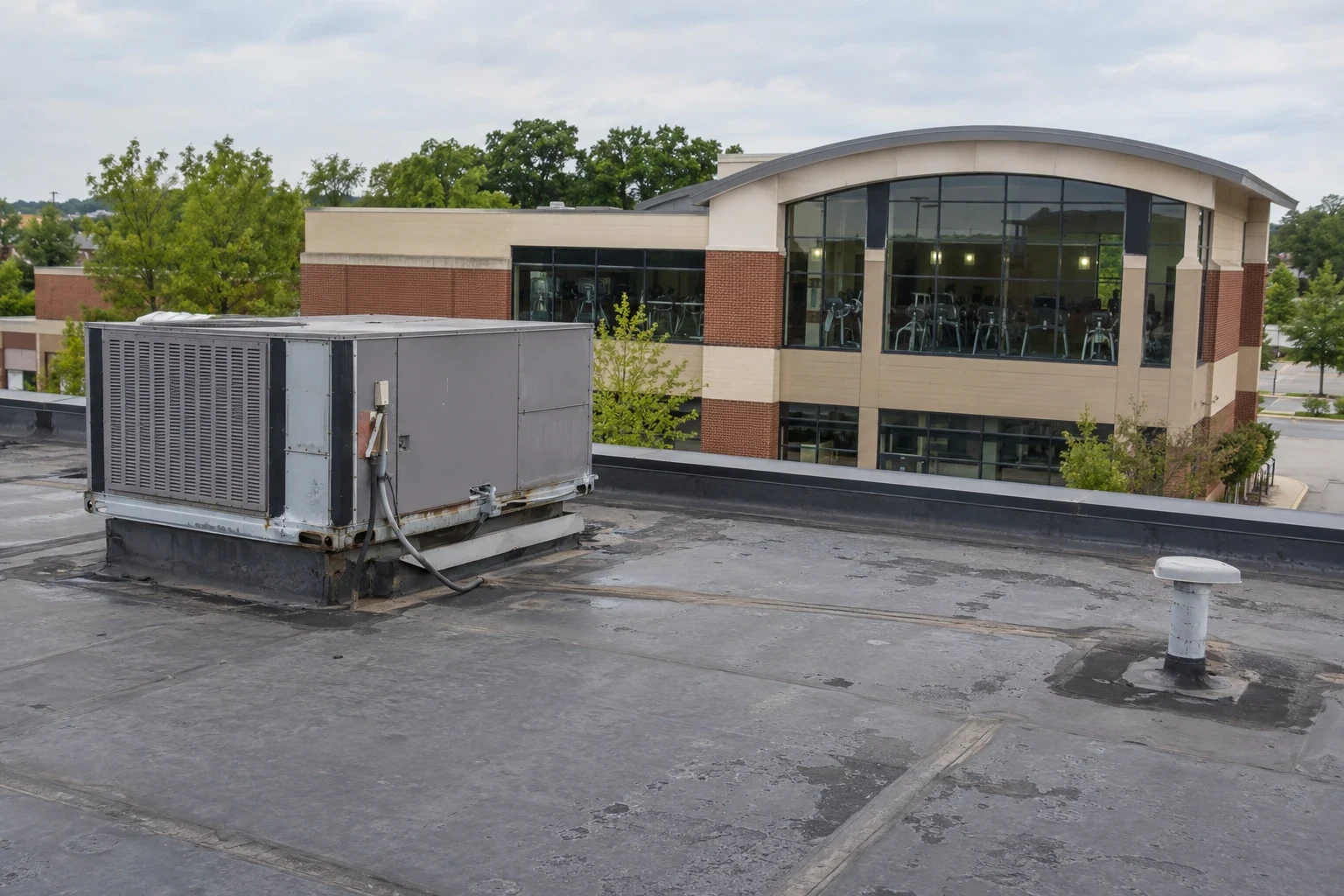
Drainage performance depends on the outlet and the roof surface feeding it. We inspect the bowl, flashing, grate, scupper or conductor and note whether debris or a separated connection restricts flow. A drainage correction can address a failed outlet, while ponding caused by slope or deflection may require a different investigation. The estimate separates those tasks and identifies how the condition was observed. A single dry visit cannot establish the full runoff pattern after every storm. If standing water is reported, we record its location, depth estimate when practical and observation time. That information helps ownership decide whether to authorize a drainage test or a larger assembly review. We do not treat a clean grate as proof that the roof has no drainage issue. The repair must tie into compatible material and leave the outlet clear at closeout.
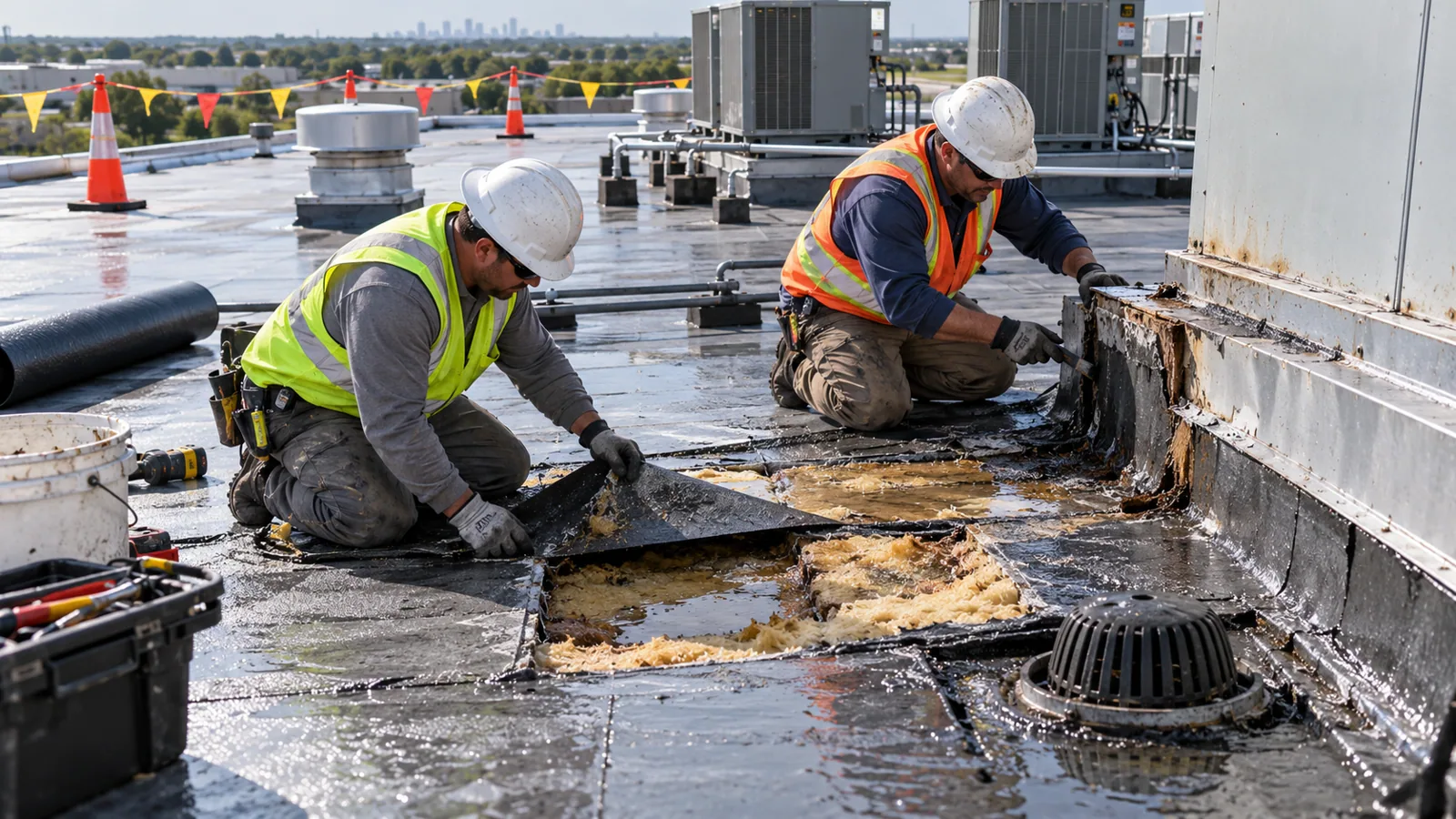
At a Belaire roof perimeter, a repair can fail again if the replacement metal is fastened into deteriorated wood or the membrane termination lacks a firm receiving surface. The inspection checks both sides of the interface: metal gauge and movement, fastener engagement, substrate condition, water path and tie-in to the roof field. If material is concealed, the owner can authorize a limited opening with a defined closure method. We keep that exploratory work separate from the permanent repair price. Photographs identify the edge section, scale and visible layers; the written scope records what remains unknown. That is more useful than pricing a long run from one loose corner.
When the roof has repeated edge leaks, the manager may ask whether isolated corrections remain sensible. We compare observed failures by elevation and roof zone, looking for a consistent attachment or transition problem rather than assuming that each wet interior area shares a cause. The report identifies where the evidence ends and what inspection would resolve the next question. A repair can proceed in a defined segment while an untested section remains outside the authorization. If later inspection shows widespread movement or saturated material, the owner can compare a broader edge replacement with the documented repair history.
Belaire District
Coordinate a multi-party property schedule
At the wall and edge transitions, the crew checks the full receiving surface, not just the visible sealant. Loose material is removed only within the approved boundary, and fastening is reviewed against the substrate that remains. If that surface cannot support a durable tie-in, the supervisor documents the exposed condition and pauses for owner direction. The finished record identifies the length corrected, the termination used and any nearby section that was inspected but left outside the work order.
Belaire District
Handle heat or storm observations as evidence
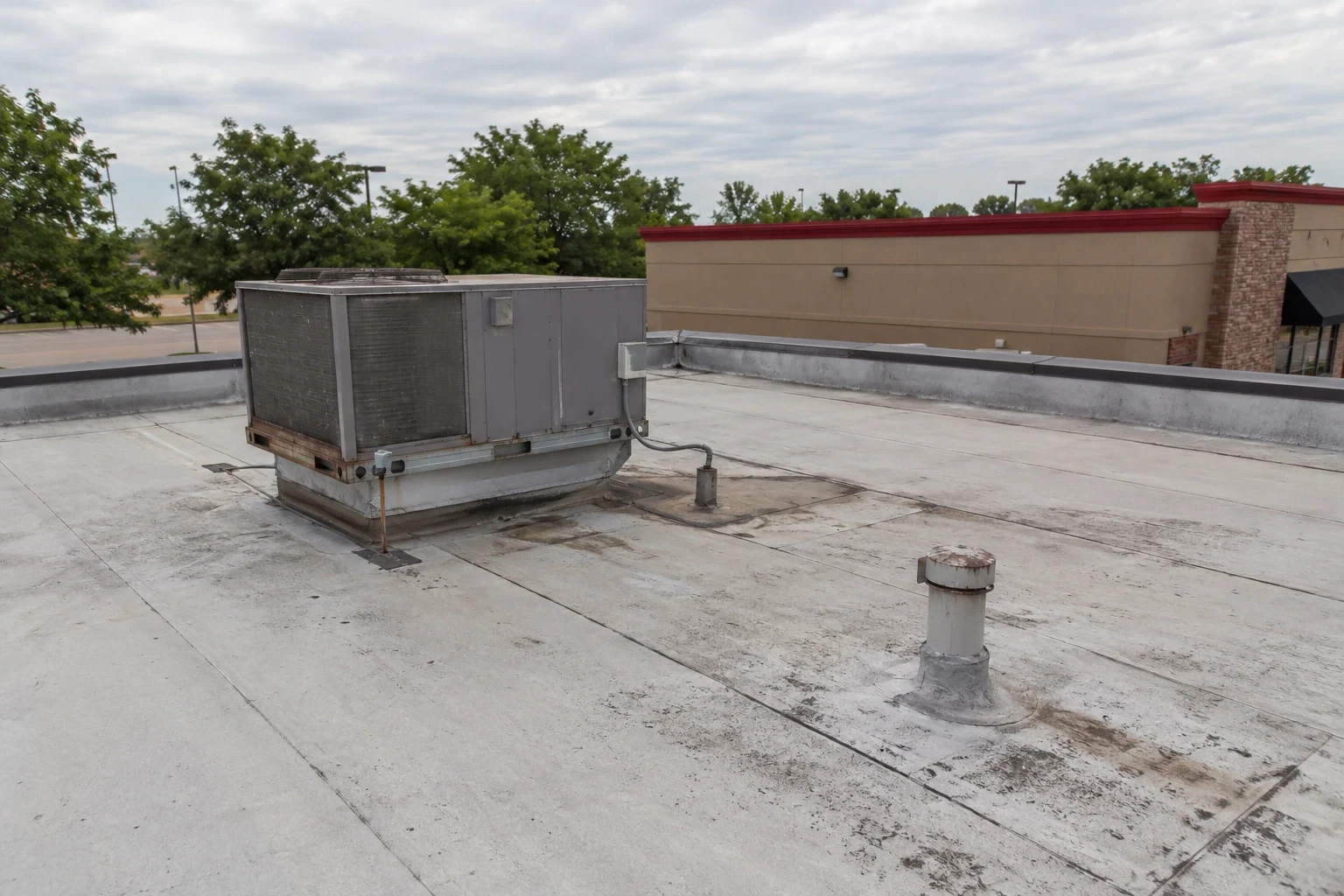
Summer heat and a storm report can help set inspection timing, but neither identifies the failed connection. On the Belaire roof, the technician photographs the reported edge, nearby laps and any displaced material before testing adhesion or opening a detail. The owner receives the observed condition, the proposed correction and any uncertainty that needs a limited test. This keeps regional weather history separate from the measured repair and avoids expanding the estimate from a forecast or an interior stain.
Belaire District
Compare the completed repair with renewal needs
When an edge repair is complete, the closeout compares the approved sketch with the installed metal and membrane termination. The crew notes fastener engagement, lap direction and the transition to the existing field. If renewal planning is also under review, the condition report can distinguish the repaired segment from adjacent areas that were not opened. That record gives ownership a useful baseline for later budgeting without implying that a short repair changes the service life of the entire roof.
For a Belaire property, a roof report can point to Downtown San Angelo and the San Angelo Business & Industrial Park as separate mapped service areas; it should not imply those places share this roof condition. A condition report can preserve the verified perimeter measurements and follow-up items.
Before release, verify that the replaced metal terminates into secure material and that the finished seal does not bridge a movement joint. Record fastener spacing, lap direction and the transition back to the existing roof. The closeout should state which length was repaired and which adjacent edge remained outside authorization.
Questions and answers
Questions About Belaire District
Can a roof repair be completed on the first trip?
That depends on access, material availability and whether the inspected assembly matches the reported condition. We confirm those details before dispatch.
Does a wet ceiling identify the roof entry point?
Not by itself. Water can move before it appears indoors. We trace likely paths and inspect adjacent roof details.
Does San Angelo hail history establish damage at a Belaire District property?
The regional record is context only. A site visit must locate and photograph the requested roof's condition before anyone can connect a claim to a specific repair.
What happens if the crew finds concealed deterioration?
The crew records the exposed area, secures the opening and requests approval for measured added removal before the permanent scope expands.